Boone
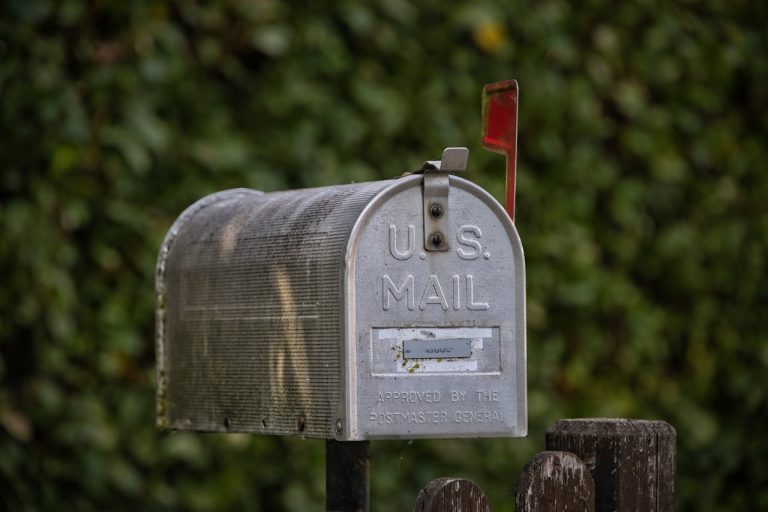
Boone Rawlings was watching The Andy Griffith Show marathon when he remembered it was Thursday, the day his Time arrived. Careful not to disturb Rowdy, asleep on the recliner, Boone eased off the couch and sock-scooted across the hardwood. Any sudden disturbance was apt to set Rowdy off. A four-pound Chihuahua became a whole-house alarm. After pausing by the door to admire his framed photo of Bratislava Castle as seen from the Danube, Boone exited the house, destined for his mailbox. On the porch, his shoes awaited.
Growing up, Boone was not allowed to wear shoes in the house. Entering his best friend Johnny Claymire’s house had been a kind of guilty, shoe-clad pleasure. And yet here he was, seventy-four years old, on his porch, slipping on his slip-ons.
Shoes notwithstanding, his Indiana childhood had been idyllic. He named his collie Lassie. Boone caught a Curt Flood foul ball at Sportsman’s Park in Saint Louis. Warren Spahn was pitching. At Riley Elementary, he and Rose McClure were May Day King and Queen. Flanked by their court, Boone and Rose recited the first stanza of fellow Hoosier James Whitcomb Riley’s poem, “When the Frost is on the Punkin,” albeit it a beautiful spring day. These days, flanked by no one aside from Rowdy, it had occurred to Boone that his frosts were numbered. Men his age were spending their final years traveling the world with their wives, shooting hoops with grandkids. Meanwhile, he was tuning in to The Andy Griffith Show, watching Cardinal games, and thumbing through Time — a magazine his father had subscribed to — recalling a time when Boone’s life held promise.
He stepped from his porch onto his walkway.
When he was twenty-one, out of college with a marketing degree, Boone secured a job at a southern Indiana insurance office, selling car insurance to his high school classmates as they set out on life’s road. As Boone and his friends reached their late-twenties, he sold them home insurance. As Boone’s friends had kids, he insured lives.
Boone worked hard. When he was thirty-four, he bought the franchise. Four years later, he had a franchise, a house, a Buick Regal, and a three-year relationship with Connie Cummings. Then one night, Connie, an insurance adjuster, said, “I think love depreciates too.”
He stepped from his walkway onto his drive.
Walking down his driveway, Boone admired the spruce trees that rimmed his corner lot. He thought they’d never looked more beautiful. But backing from his driveway onto Woodmoor had become dangerous. Turning from Woodmoor onto Adams had grown, in measure with the trees, risky. I need to call the trimmers, Boone thought.
His mailbox was in sight.
Rejected by Connie Cummings, Boone worked even harder. His friends were moving out of starter homes; acquiring third cars and upping life policies. A divorcee, Monica Kelso, whom he had dated in high school, asked Boone out. Over dal bhat for two at Get Yeti, he insured her jewelry. Rather than risk romantic failure, he sought business success.
Boone was at his mailbox. Stepping off his driveway, his back was to the street. In that moment, if you were to ask him when his life had reached its peak, he would have said July 21, 1994, 3:16 p.m., Bratislava time.
The previous year, Rawlings Insurance had been the top producer in Kentuckiana. As top producer in the top producing franchise, Boone won a cruise down the Danube for two.
A Chevy van was turning onto Woodmoor.
Companionless, Boone offered the cruise to his top sales associate, Lenny Davis, and Lenny’s wife, Mona, who taught art at Eugene V. Debs High.
“Mona is afraid of water. Besides, you might meet someone, dude,” said Lenny.
The van was turning faster than a spruce-shrouded turn warranted.
On the second day of the eight-day cruise, Boone entered the Aquavit Terrace for lunch.
Every table was full — or nearly so. Reluctant to join two or more others, Boone approached an attractive, olive-skinned woman at a two-top. Gesturing toward the table, he asked, “May I join you?”
With a toss of her shoulder-length dark hair, she said, “Oui.”
“Parley-vous English?” asked Boone.
“Un peu,” the woman said, holding her left thumb and index finger an inch-or-so apart. In the portside morning sunlight, her wedding ring glistened.
The van was not slowing down. In full anticipation of his Time, Boone was unaware of all else.
Her name was Belle Lyon. Her husband, a bond trader, was in Hungary for the week. Belle had elected to join him in this way: an eight-day cruise from Regensberg to Budapest.
For the remainder of the cruise, Boone and Belle took their meals together. Belle showed Boone pictures of her children: a teenaged boy and girl. Pictures of her dog: a Labrador with feet the size of tearoom saucers. If Belle had pictures of her husband, she elected not to show them.
Opening the mailbox, Boone saw a melting iceberg on the cover of his Time. He reached into the box.
Together, they took walking tours of Passau, Krems, and Vienna. Following Belle’s lead, they waltzed to Strauss in the ship’s ballroom. Neither Boone nor Belle entered the other’s room. But on the final day, cruising past Bratislava Castle with their hands atop the ship’s rail, Belle lifted her left hand and placed it atop Boone’s right. “Perhaps in another life, mon cher,” she said. Boone’s watch read 3:16.
Decades passed. Tires screeched. Inside the house, Rowdy barked.
Destin
On a Thursday morning in June, I got a call for a six-dollar sausage wrap. I drove to Break Fast, bought the wrap, and went to a dump on Mulberry Lane, where a big guy with a beard to his man-breasts came to the door in a wheelchair. Said he couldn’t find his wallet and could he start a tab. I told him if I could afford tabs I wouldn’t be driving food around in an old Chevy van. He told me to wait a second and wheeled away. This is a guy I saw two days before, walking laps around a table at The Nine Ball. The only help he needed was a crutch to reach a corner shot. The wheelchair was a prop is what I’m saying. Like he thought I’d give him a break.
A minute later, he wheeled back with a greasy five-dollar bill in his hand. “Will this do?” he asked. “Sure,” I said. I grabbed his five, reached in the bag, and took a dollar bite of sausage. Then I dropped the wrap in his lap and started running. He jumped out of his chair, but I beat him to my van and drove off.
Next, I got a call from Wild Bill Peacock at Peacock Motors. Wild Bill said if I could bring him a strawberry jelly-filled from The Hole and an iced mocha from Perk Up in the next twenty minutes, he’d be good for an extra ten bucks. I hit The Hole, paid for the jelly-filled, and swung by Perk Up, where my ex-girlfriend worked the register. The breakup was Lilah’s idea. I hoped we’d get back together. My dollar tip was an investment.
I got to Peacock Motors with two minutes to spare, but Wild Bill’s son, Mick, said his dad had to leave with his muscle, Larry, to repossess a Bronco. I asked Mick to pay me back for the coffee and donut. He said he didn’t drink coffee, and his dad needed a donut like he needed another asshole. Then Mick asked, “What kind of donut,” like maybe he’d eat it. When I said “strawberry jelly-filled,” he laughed.
I spent the next hour parked at Peacock Motors, waiting for either Wild Bill or a new order. When nothing happened, I downed the warm iced mocha and the donut and called it lunch. I was wiping jelly off my shirt when my phone rang. “Food to Door,” I answered.
It was Darlene Long. She used to be my counselor at Debs High. One time, after I’d shoved Larry Cranford’s face into his locker, Darlene told me that I should treat people with the same respect that I expected from them. “I do,” I told her.
Flash forward fifteen years. Once or twice a week I’d bring Darlene her dinner, usually shrimp stir-fry from Get Yeti, a Tibetan diner named for their Bigfoot. Darlene lives in a big house on Montclair. In the corner of her porch, she has a camera with a speaker. After I’d ring the doorbell, she’d tell me to come in. I’d take off my shoes — her rule — and meet Darlene in her entryway, where she’d offer me a seat in a chair beside the door. I’d sit as she went to get her money.
Darlene’s entryway is the size of my bedroom, which made me wonder how big her bedrooms must be. Which made me wonder how many bedrooms. But I’d never seen anyone other than Darlene in the house. And she never ordered more than one meal.
Dead husband, I guessed. Grown kids.
Thanks to a mirror on the entryway wall, just below another camera, I could see where Darlene went for the money — down a wide hallway with a bookcase. A big blue jar sat on top between two pictures. Darlene would take the lid off the jar and pinch cash from the top. She barely had to reach in. Sometimes, bills would spill on top the bookcase. When she came back to me, I’d stand, hand her the stir-fry, and smile. She’d give me twenty dollars for the twelve-fifty meal.
That Thursday, Darlene called around eleven-thirty. Said she was about to see her chiropractor, and she’d like to have a Greek salad from Grocery Barn. Green peppers, red onions, feta, heavy on the kalamatas. I should have it waiting at her house when she gets home. She said the house was unlocked, and to leave the salad on the chair by the door, where I’d find a twenty. I made a mental tab for Wild Bill and put his mocha and jelly-filled on it. Then I drove to Grocery Barn and paid for the salad. Around here, people want food-in-hand before paying. Then I smile, and they tip me. Darlene’s salad cost nine-fifty. A ten-fifty tip, and I wouldn’t even have to smile.
In another three days, I’d be two months behind in my rent — with nowhere to go if the bastard evicted me. Lilah, who used to split the rent with me, had moved out two months ago. She said I “lacked ambition.” As if thirty-two was too late to get some, and she’d hit the big-time at Perk Up. My parents had moved to French Lick three years ago. Dad dealt blackjack there. He thought the casino might hire me, but the speakers I stole from Audio World — or tried to — cost eight hundred dollars. A felony theft in Indiana starts at seven-fifty. No casino job for me. Food to Door was Lilah’s idea, just before she dumped me.
I was about a half-mile from Darlene’s house when I got another call. It’s not like a thirteen-year-old van has Bluetooth. I was fumbling for my phone as I started to turn right onto Woodmoor — a shortcut to Darlene’s. I should say a quick right around some overgrown trees. Quick enough to send her salad to my floormat. I was reaching for the carton (not much had spilled out) when I saw a silver-hair standing in the street. I slammed on my brakes, but I smacked his butt with my headlight and delivered his head into the mailbox.
From inside the house, a dog yapped.
Darlene
Darlene Long had hurt her knee doing Pigeon Pose in yoga class at Flex Moore. When her doctor blamed her injury on arthritis — that everyone her age has it — she said, “Everyone my age thinks everyone your age is too quick to write us off.”
For thirty-eight years, Darlene had been a guidance counselor at Eugene V. Debs High. She’d always stressed the importance of direct speech. After explaining to the students who Franklin Roosevelt was, she would quote him. “Be sincere, be brief, be seated.” In Darlene’s case, after speaking to the doctor in brief sincerity, she stood and left his office.
A chiropractor popped Darlene’s knee into place and told her to come back twice a week for two weeks of dry needling. And in the meantime, go easy on Pigeon Pose. Thursday was her final visit. Before entering the chiropractor’s office, she called Destin Hart at Food to Door and ordered a Greek salad from Grocery Barn. She would have just enough time for lunch before leaving for one o’clock yoga.
Darlene had met her husband, David, when he was in law school at IU, where she was working on her Master’s in School Counseling. David’s quick temperament suited his prosecutorial skills. Darlene loved David, but she was not fond of his temper. More than once, he’d brought their daughter Angela to tears for missing her curfew by mere minutes. After their son, Ethan, came home with a small dent in the Volvo, David was furious. Ethan had been inside Game Stop when another gamer swung his Wrangler’s door into Ethan’s car. But David blamed Ethan for parking too close to a 2-door. Then five years ago, David shanked a drive and had a fatal stroke on a par 4.
Angela lived in Oregon. Divorced. No kids. Ethan lived in Atlanta. Like his father, Ethan practiced law. Like his sister, he was divorced. He had a teenage son and a ten-year-old daughter who Darlene saw at Christmas every other year. After David died, Darlene’s married friends had all but abandoned her.
One day, months ago, Darlene ran into Garrett North in the produce aisle at Grocery Barn. Garrett had taught American history at Debs for as long as Darlene had counseled. He was on his way to a senior yoga class at Flex Moore, and he suggested to Darlene that she try it. She bought some tights at Fit Start and went the following week.
The class consisted of eight women, including Darlene, and two couples, including Garrett and his partner, Gerard. They met twice a week: one o’clock Mondays and Thursdays. After class, most of the attendees went across the street to Perk Up for coffee. Darlene looked forward to Mondays and Thursdays. The other days, not so much.
Coming out of the chiropractor’s office, Darlene heard her phone ding inside her purse: her porch camera sighting Destin, she assumed. In succession, two dings: the entryway camera followed by the camera on the porch as Destin left, most likely. But a few minutes later, Darlene was halfway home when her phone dinged three more times. Had Destin forgotten something? I’ll check my phone when I get home, she thought before turning onto Montclair, pulling into her garage, and taking off her shoes in the mudroom. Through the kitchen archway, she saw her salad on the chair in the foyer. Dings — all but forgotten.
Yoga started in little more than thirty minutes. It was a ten-minute drive to class. Darlene decided to change into her tights, then eat as much salad as she had time for. She entered her hallway, took two steps past her bookcase, and stopped. Her antique vase was missing.
The first thought Darlene had was, Could Destin have done this? The second thought was that he, or whoever he was, might still be in her house. Vase in hand.
“There’s been a robbery at 115 Montclair,” said Darlene. “I’m calling from my neighbor’s driveway.” After she hung up, she tapped the camera app on her phone and watched the intruder intrude.
Boone
For Boone, few things could have been further, or for that matter farther from work than cruising down the Danube. Perhaps because of this, he found himself open to Belle’s companionship. But returning home to Indiana, once again his work consumed him. When he turned seventy, an Indianapolis insurer offered to buy Rawlings Insurance for a price Boone could not ignore. He was hired as office manager. Six months later, the owner found Boone expendable.
Until then, he had been able to ignore his loneliness by working. After coming home at night, he’d balanced company books and paid payroll taxes. He’d composed radio and tv ads late at night in bed. Free of these responsibilities, recognizing his need for companionship, he went to the pound and adopted Rowdy, whose barks awakened Boone now.
It was Rowdy all right. But who was holding him in the chair beside the bed? She looked like Hillary Clinton. Shifting off a sore butt-cheek, Boone asked, “Who are you?”
“The question is, who are you?”
A Hillary mask. Things were coming clear. Somewhat. There was his Time, propped against Rowdy. An ice pack was on Boone’s forehead.
“Boone Rawlings.”
“Where do you live?”
Looking around his room, Boone said, “Here.”
“Your address, I mean.”
“935 Woodmoor.”
As if satisfied with his answers, the woman set Rowdy and the magazine in bed beside Boone. “Stronger together,” she said as she left Boone’s room.
Hearing footsteps in the hall, Boone thought, She has shoes on in my house. But so do I. Shoes in bed! And clothes.
He heard the front door shut.
The bedside clock read Friday, 12:43 AM. Boone had missed the Cardinal game. But not only that, he’d missed the past . . . what? . . . thirteen hours! The last thing he remembered was going to the mailbox around noon. When his butt didn’t hurt. Or his head.
“What happened, boy?”
As if about to speak, Rowdy drew near. His breath smelled like baked beans. “Daddy’s hungry,” said Boone, removing the ice pack and standing from bed. In the mirror above his dresser, he saw a golf-ball-sized lump on his forehead. After taking off his shoes and changing into pajamas, Boone ate a peanut butter on wheat and a cup of plain yogurt. Meanwhile, Rowdy poked at his kibble as if he’d recently eaten.
Hours after Boone returned to bed, he dreamt of driving through Krems in a Chevy van with Belle Lyon. Stopping at the Karikaturmuseum, they stood before the sculpture, Ms. Austria, whose giant bronze head was tilted back as though laughing. But suddenly she was laughing: bursts of loud laughter which he and Belle accompanied. A trio of laughter interrupted by a doorbell and dog barks.
The bedside clock read Friday, 8:16 AM.
Darlene
It was Destin on Darlene’s app. Dings four, five, and six: the porch camera as he arrived at her house, the foyer camera as he entered, the porch camera as he left. He’d even taken his shoes off first. But it was the first three dings that were of greater interest to Darlene and Sergeant Kirk Peters.
Darlene remembered Kirk from her counseling days at Debs High. Kirk had been caught selling stolen glue in the cafeteria. Darlene had persuaded Principal Congreve to leave Kirk’s offense off his record if Kirk would memorize the health consequences of glue sniffing and recite them at a school assembly. With what could only be described as apathy (consequence #11), Kirk remembered sixteen of eighteen. Close enough to absolve him.
“Do you recognize him, Mrs. Long?” Kirk asked.
Kirk had arrived within minutes of Darlene’s call. They were standing in Darlene’s kitchen looking at the video on her phone. Kirk and another policeman had already searched her house.
“He looks familiar, but no,” said Darlene as she and Kirk watched the man with her vase leave the house, turn left at the sidewalk, and disappear from view.
They would dust for fingerprints. But with Destin smudging the man’s prints on the doorknob, Kirk said their best hope was that a neighbor saw a car. The porch camera hadn’t started recording until the man neared Darlene’s porch, and there was no car in the background. After the man disappeared, several minutes passed before Destin’s arrival. His van, parked at Darlene’s curb, appeared empty of passengers.
“How much money was in your vase, Mrs. Long? Approximately.”
“I don’t know. Eight or nine hundred dollars.”
“Why would you keep that much money there?”
“My husband thought it was a good idea to always have some cash on hand, and no one would think to look in our vase. Or so David thought.”
After sending the videos to Kirk’s phone, a memory came to Darlene. She and David had been involved in a minor collision at a four-way stop. David was driving, and he and the other driver had gotten into an argument as to who was at fault. It had all been resolved in arbitration, but not until David had a few harsh words for the Rawlings Insurance man who’d insured the other driver. It must have happened ten years ago, but Darlene remembered feeling sorry for the Rawlings man. As a school counselor, she had written many reports. If she had reported on him, she would have described him as exhibiting little affect. As if life held little interest for him. “Let’s watch it again, Kirk,” she said. This time, Darlene told Kirk she thought the man might have worked at Rawlings Insurance years ago. “It looks like his pants are torn, and he’s limping,” she said. “What’s that on his forehead?”
“Thank you, Mrs. Long,” said Kirk. “We’ll be in touch.”
Destin
When I was thirteen, I got on my bike to go to Doug Anderson’s house. It was about three-thirty in the afternoon when I left home, but the next thing I remember is waking up in bed at four o’clock in the morning. My parents said I’d come home before dinner with a lump on my head and a scratch on my bike. I was talking shit about the Indy 500, how it was fixed and I could prove it.
My parents took me to the ER. They gave my parents an ice pack, and told them to keep me from doing anything stupid until I started making sense. My mom called Doug’s mom who said I’d never made it to their house. Who knows what happened?
Dad said I did everything he asked that night without complaining, which was totally not me. I washed and dried the dishes. I cleaned my room. When I came to the next morning, I saw that my Green Day poster was missing. The one with a bleeding hand grenade shaped like a heart. Dad had told me to shred it.
The old guy’s head was bleeding too. I helped him up from the street and into my van. I grabbed a wad of napkins from my glove compartment and told him to hold it against his forehead. Then I ran to the nearest house for help. His house, I hoped. Whoever was there could take him to the hospital.
I could barely hear the doorbell for all the dog yaps. When no one came to the door, I tried it. Locked. Who locks their house to go to the mailbox? I ran back to the van, but before I got in, I picked a magazine up from the street. Time, it was called — with a label that said Boone Rawlings. Halfway to the hospital, Boone held up his magazine and said, “My dad will be happy to see this when he gets home from work, Johnny.”
“Who’s Johnny?” I asked.
“You are. I wear shoes in your house.”
He was making no sense. And what are the odds an old man’s old man would still be working? That’s when it hit me that I could put Boone’s confusion to work like my dad had put mine. Here I was, due at Darlene’s house where a money jar sat and she didn’t. Darlene had always treated me okay, but her money would help me out a lot more than it could help her.
“Let me see your forehead, Boone?”
When he took the napkin wad off his head, I could see that the bleeding had pretty much stopped. The doctors would give him an icepack and send him on his way. I could look after him as well as anyone.
I told Boone to press the napkins to his head again. They stuck. “Will you do something for me, Boone?” I asked, thinking that if he got caught, he’d get off easy. Serving meals in a shelter. Walking dogs at the pound. He had a dog, didn’t he? He might even like doing that.
“Okay, Johnny,” Boone said. His grin made him look like a silver-haired smiley face with napkins on its head.
Because of Darlene’s porch camera, I couldn’t park at her house. I told Boone that when we stopped, I wanted him to “walk to the house next door, go inside, turn right, grab a big blue jar from a bookcase, and bring it to me.” After saying that five or six times, I asked him to repeat it. He did. Close enough, anyway. I parked next door, and he got out.
The thing I had going for me is that in neighborhoods like Darlene’s, people mostly stay inside. Kids, even. That day no one was outside except Boone, limping down the sidewalk. My headlight must have caught his butt at an angle. His back pocket was hanging down like a mud flap. Before he started up Darlene’s walkway, he turned and waved at me. I gave him a thumbs-up, but I was thinking, What if he doesn’t come back? But he did, blue jar and all.
It was almost 12:30. Darlene would be home soon, but I waited a few minutes before I eased my van forward. That way, if I was questioned, I could say I got there too late to see anything. In case Darlene’s porch camera picked up my van, I told Boone to duck down. I parked at Darlene’s curb, grabbed the salad off the dash, and jumped out. “Stay down, Boone,” I said. “I’ll be right back.” A few minutes later, I was driving away from Darlene’s house with Boone, a twenty-dollar bill, and a jar full of cash.
A few blocks later, I told Boone that he could get up. But as he did, it hit me that it wouldn’t be the greatest idea for me to be with him when he cleared up. Seeing me might bring it all back. Bring me back. When I took the speakers, I’d been let off with a six-month sentence at Chain O’Lakes Correctional and a five thousand dollar fine. Dad took out a second mortgage. I hated to think what they’d lay on me this time. Or what it would cost Dad. That’s when I thought of Lilah. She’d be getting off work soon. When Boone came to, she could tell him she found him in the street and helped him into bed. Or whatever.
Lilah and I hadn’t parted on the best of terms, but it could have been worse. Perk Up paid her for shit. For a hundred dollars, she might agree to help me. I knew she wouldn’t rat me out, since she knew I could rat her out for things she’d done. She’d stolen the phone she answered on, for one.
“Two hundred and carryout from New Deli,” said Lilah. “I’ll need to eat if he doesn’t make sense soon. Pick me up at my mom’s house.” When I told her to bring an ice pack, she said, “Two hundred ten.”
In 2016, Lilah and I went to a Halloween party dressed as the Clintons. Lilah wore her mother’s pantsuit. I wore sunglasses and carried a toy saxophone. “Stronger together,” Lilah said like a hundred times. I half expected her to say it as she got in my van. I have to admit, the mask was dope. I should have been wearing my Bill mask.
“Hillary, this is Boone,” I said as Lilah jumped in back.
“Hi, Boone,” said Lilah.
“Hi, Hillary,” said Boone.
Lilah told me to drive to New Deli and get her a Five Seed Veggie and a side of baked beans. She’d wait in the van with Boone. When I came out with her food, she said, “Your place or his, Bill?” Like I’d take Boone to my place.
“Do you have your house key, Boone?” I asked.
“Yes, Bill.”
Boone
“Are you Boone Rawlings?” a policeman asked at Boone’s door.
It was Friday morning. Boone had just been awakened from a pleasant dream about Belle Lyon and Ms. Austria. “Yes, officer.”
“We’d like to come in and talk to you. But please control your dog.”
“Here, Rowdy,” said Boone. Picking up Rowdy worked like an off-switch for barking.
“We have a few questions, Mr. Rawlings. I’m Sergeant Kirk Peters. This is Officer Wilson.”
“Have a seat,” said Boone, nodding at his sofa. “I’ll be right back. I want to change out of these pajamas.”
“First things first. What happened to your head?” asked Sergeant Peters. “How’d you get that bump?”
“That’s what I’d like to know. I went out to get my mail yesterday around noon. The next thing I knew, I woke up in bed after midnight with a woman wearing a Hillary Clinton mask beside me. She was in a chair, I mean.”
“What did she say?” asked the sergeant.
“She asked me who I was and where I live. When I told her, she left.”
“Do you know anything about a blue vase?”
“No. Do you think I did something?”
Ignoring Boone’s question, Sergeant Peters asked Boone if Corporal Wilson could have a look around. Then they’d need to take Boone to the station for fingerprints and further questioning.
“Look all you want,” said Boone, “but I need to feed Rowdy and let him out for a while before you take me anywhere. And I’ll need to let him out again in a few hours.”
“If necessary, we’ll have someone from Animal Control come and get him,” said the sergeant, following Boone and Rowdy into the kitchen.
“The pound, you mean,” said Boone.
As Rowdy pecked at his kibble, Officer Wilson entered the room, “I found this in the bedroom,” he said, holding a wad of bloodied napkins in one hand and Boone’s torn pants in the other.
Darlene
At nine-fifteen Friday morning, Darlene received a call from Kirk Peters informing her they had a suspect in custody. “You were right about the Rawlings Insurance man, Mrs. Long. He’s the man who stole from you. Boone Rawlings. Thanks to you, we found him. But we haven’t found your money or your vase. We’ll talk to Destin Hart later this morning and see if he saw anything.”
Boone Rawlings. That was his name all right, thought Darlene. But to think she was responsible for his apprehension — after what she’d discovered last night . . . “Do you mind if I talk to him, Kirk?”
“Ordinarily, I would—”
“And don’t talk to Destin just yet. I have some new information.”
Thirty minutes later, Darlene was inside the police station, seated next to Kirk and opposite Boone Rawlings. “I told you, I don’t remember anything,” he said. “But I have to get home to Rowdy.”
“We think your head injury has something to do with why you stole from Mrs. Long,” said Kirk. “We’ll get to the bottom of this. In the meantime, we need to keep you here. An animal control officer is on his way to your house. We’ve given him your key.”
“I’m sorry if I took something. But you don’t understand, officer. I adopted Rowdy at the pound. I promised him he’d never go back.”
“Please, calm down Mr. Rawlings,” said Kirk.
To Darlene, given the circumstances, Boone did seem calm. Admirably so. If David had been in Boone Rawlings’s position, Kirk would have had to cuff him. Using her counselor-voice, Darlene said, “Excuse me, Mr. Rawlings, Boone. May I call you Boone? I have only one question for you? Do you ever eat at Get Yeti?”
“Not in years. It gives me indigestion.”
Darlene said she thought she understood what had happened. But she didn’t want to tell Kirk yet. She had a call to make and a person to see.
“What do you mean you won’t tell me?” said Kirk. “What new information do you have?”
“I mean I’ll tell you what you need to know when the time is appropriate, Kirk. In the meantime, call the animal control officer and tell him to wait at Boone’s house with the key. I’ll take Rowdy home with me. Is Rowdy friendly, Boone?”
“Yes, just pick him up when he starts barking.”
“Now you listen to me, Mrs. Long,” said Kirk.
But Darlene wasn’t listening. Instead, she informed Kirk that the police department would have had no use for a glue salesman. “Good thing someone kept that offense off someone’s record. Right, Kirk? Don’t worry Boone, I’ll take good care of Rowdy. I hope to clear up things soon.”
Destin
Thursday afternoon, after dropping Lilah and Boone off at his house, I drove to my landlord Howard’s place and paid him the nine hundred I owed for last month’s rent. As long as I only stayed one month behind, I was solid. Considering the two hundred ten I owed Lilah, I was twenty-seven dollars ahead. Plus, whatever the jar was worth. I buried it in my backyard between some dead shrubs. If the cops searched my house, they’d find zilch. When things cooled off, I’d ask Google how much old jars are worth and sell it.
A little before one o’clock Friday morning, I got a call from Lilah. She said she’d left Boone and was walking up Adams. I got in my van, and a few blocks from Boone’s house my headlights hit Hillary Clinton walking backwards. Lilah had the mask on the back of her head. When she got in my van, she held out her hand and said, “Where’s my money?” I told her it was at my place. “Big surprise,” she said, like she thought I had other things in mind.
Lilah reminds me of Nicole Kidman in Aquaman. Atlanna with dark hair. As I drove to my house, I told her that the reason I didn’t have the money was because I couldn’t risk having any cash on me in case we got pulled over.
“Nice try.”
When we got to my place, I paid her the two hundred, plus ten for the icepack. Then I reminded her what time it was, and she wouldn’t want to wake up her mother, would she? She said it was a shame I didn’t try this hard on other things. She stayed the night, but she made me sleep on my couch. I dropped Lilah off at Perk Up at six o’clock Friday morning. Then I went back home to bed. My pillow smelled like Lilah.
Around ten, I got my first call of the day — an order for an egg ’n cheese biscuit at Bread and Breakfast. The call was from Darlene. I bought the biscuit with her money and drove to her house. But when I got there, I heard dog yaps coming from inside. “Come in, Destin,” said Darlene before I even rang her bell. I took off my shoes and went in.
Darlene was standing in her entryway holding a yellow dog the size of a squirrel. “He’s not mine,” said Darlene, as if I’d asked. “But I think you know Rowdy’s owner.” My butt was halfway to the entryway chair when Darlene said, “Not there, Destin. In the living room.”
The living room? I’d never been in there. I didn’t have a good feeling about this. I was about to sit on Darlene’s couch when she pointed to a straight-backed chair. I sat. Standing in front of me the way Darlene was, I knew I was about to be questioned.
Darlene recognized Boone on her camera. And she recognized the Get Yeti napkins stuck to his head. They’re white with a big green foot in the middle. I always brought them with her stir-fry, and she guessed I kept some handy. She’d also caught me looking in her mirror whenever she took money from her jar. “How would Boone have known to look there?” she asked. On top of that, she saw the tear in Boone’s pants and his limp. She thought I might have hit Boone with my van on the way to her house and “concussed him” — her words. “Then you took advantage of him. Am I right?”
Darlene said the police planned to question me later, but if I was honest with her, she had ways of getting them to lay off me. “I know there’s a good person inside of you, Destin,” she said. “Let’s hear what he has to say.”
I told her everything except Lilah’s name. Darlene seemed to respect that. When I finished, she and Rowdy sat on the couch like the interrogation was over. It wasn’t.
“You could have seriously hurt Boone without even knowing it. Next time, go directly to the hospital. Do you understand?”
Next time?
“And tell me the amount of money that was in my jar.”
After giving it some thought, I said, “Five hundred sixty-three dollars.”
“Now, Destin,” said Darlene, “what does the good person say?”
“Eleven hundred thirty-seven.”
Darlene said she expected me to return her jar with all the money. I told her that might not be possible. When she asked me what I meant, I said. “It’s not possible.”
What was possible was that if I returned the jar, she was willing to accept the money in payments, meaning she wouldn’t be paying for any food deliveries until I bought eleven hundred thirty-seven dollars’ worth of food. And if I quit my job, I had to pay her fifty dollars a month. If I didn’t, she’d be “forced” to call the cops and tell them what happened. When I asked about tips, she said I shouldn’t push my luck. “Now, how much was my biscuit?”
“Four forty-six.”
There was a short table in front of her couch. There was a notepad and pen on top of the table. She grabbed the notepad, and on the first line of the first page she wrote $1,137. She wrote $4.46 under that and had me initial it. Under that she wrote my new total. Then she sent me on my way. No tip.
I dug the jar up, washed it off, and took it to Darlene the next day. This time, no Rowdy. But a few nights later, Darlene called with an order for two shrimp stir-fries. I paid Chodak at Get Yeti, grabbed some napkins, and drove to Darlene’s. I parked next to a Buick LaSabre in the driveway and walked to the porch, where a pair of men’s shoes sat. Slip-ons. “Come in, Destin,” said Darlene on speaker. Again with the dog yaps.
Darlene and Boone met me in the entryway. As I gave the stir-fries to Darlene, Boone picked up Rowdy. Boone’s forehead was the same yellow color as Rowdy. “I understand we’ve met,” said Boone.
Darlene took the stir-fries to her kitchen. When she came back, she had her notepad in hand. “Twenty-five fifty-seven,” I said.
“Initial here,” said Darlene. “Don’t you have something to say to Mr. Rawlings?”
I apologized to Boone and told him I hoped he was okay. But he seemed more interested in my delivery business than anything. As he sat down in my former hot seat, he asked,
“What do you call it?”
“Food to Door,” I said from the couch.
“Why just food?”
“Because that’s what I deliver.”
Boone said he got that, but why not “branch out.”
“You mean like, food and other stuff?”
Boone said he knew a woman who could paint pictures on my van of all the things I deliver. She was the wife of a guy who used to work for him. Boone thought I could pay Mona for the pictures like I was paying back Darlene.
Why charge anybody anything? I thought. But it’s not like I’d had any great success up to then. The other question I had was why did Darlene and Boone give a care about me. If I was in their shoes, I wouldn’t have. But it was there, in Darlene’s living room, where Food & Stuff was born.
I usually bring boxes of Kritter Litter to Mona for her house-pig, Winnie. But you name it, I deliver: firewood, bird seed, mulch. Last week I drove to Vincennes Brewing and brought back three cases of Total Eclipse of the Tart to Saint Barnabas for their bingo night. Every time I deliver something different, Mona paints a picture on my van. The outside of my van looks like Walmart.
Lilah decided I had some initiative after all. She moved back in with me. My parents tell their friends I run a distributorship, and Wild Bill pays me fifty dollars a month to fly a Peacock Motors flag on my van. As the numbers come down on Darlene’s pad, I move up in the world. Or in our town, anyway.
Not long after Food & Stuff got going, I got a call from a high school classmate, Mandy Moore. Mandy Moore at Flex Moore. She asked me to pick up a Pilates machine at Fit Start. She said she’d already paid for it — like I might pay two thousand dollars by mistake. I said fifty for the delivery. She said fine.
The saleswoman at Fit Start helped me load it. I parked outside Flex Moore and went inside to find someone to help me carry it in. I headed for some watery music and stopped outside at an open door. Inside the room, seven or eight old people were lying on their backs. “Now breathe and move up to bridge pose,” said Mandy.
I doubt I’ll have Mona paint a Pilates machine on my van. How much business would that bring me? I want to save space for stuff that people want. But thanks to Mandy and her order — or you could say thanks to me for hitting Boone and stealing Darlene’s jar — after the bridges came down, I saw Darlene slide her arm across the floor and put her hand on top of Boone’s. I ought to ask Mona to paint that.
Image by Wolfgang Vrede on pexels.com, licensed under CC 2.0.

- Food & Stuff - December 19, 2025
Boone, Destin, Darlene, and I thank you!