Pines crowding the two lanes, then a bridge. From its timbers a smell of creosote. Riprap spilling down the steep banks to a swollen creek, dull rumble and mist coming up. Just past that, the silver BMW parked on the right, hazards flashing.
Tom slows, pulls his Ford pickup over behind the BMW, thinking, what the hell, he’s got time. An EMT, off-duty now but of course you take the work home. You help. He thinks about calling Jenny, letting her know he’ll be a tad late, but why bother. Leaves the engine running, approaches the BMW on its left, like the state troopers do. Keeping his eyes on where the BMW driver’s hands should be.
“You having trouble?”
“Sure am.” BMW guy staring down into his lap. Maybe some illegible directions there. Gives a deep sigh, passes a thick book out the window, his thumb marking a spot three-quarters in.
“Can you make any sense of this?”
It’s a bible, open to Corinthians something something.
Tom smiles at the driver – hah hah, funny – hands back the bible. Notices the white plastic strip hanging from the rear-view mirror, dangling there next to a string of dark-brown beads.
“No, really: Is your car okay?” Already thinking: weirdo. And: how fast can he dash back to his pickup? Tom’s no dummy, he’s read newspapers, seen movies. BMW guy is barely 20, if that, wearing a sleeveless camo jacket, his left arm covered in tattoos, one of them sprawling up onto his neck. Looks to belong more on a motorcycle than this fancy ride. Again, there are things your mind jumps to.
Still, Tom’s lifting 250 these days, 300 in a pinch, and this guy’s a scrawny fellow, not much more than a kid, so does it matter.
Driver stares at the bible again, giving it one more chance, this road map from a foreign country. Finally sighs again, explodes: “Some bullshit!” Slams the book down on the seat next to him.
“Yeah, I get you,” Tom says. “Never had the head for the God stuff, myself.” Waits a beat, then: “So … your car?”
BMW guy, calmer now. “Battery. Dead.” Not looking at Tom. Talking to the dashboard.
Tom asks him to try starting it, walks forward, pops the hood, raises it. Shielded for now behind the hood’s silver wall, looking not at the battery but off to the right, then to the left, like a man who has returned to his house to retrieve something but finds he’s forgotten what he came back for. Then he realizes: the white strip – what a priest tucks in his collar.
Leans toward the road, calls: “Go ahead. Give it a whirl.”
Listens to the clicking sound. “All right. Stop.”
Walks back, leans low, his hand on the driver’s door. Wanting a better look inside. On the shotgun seat: a small travel case, ajar. Purple linen, candles, shiny metal cup littering the floor.
So … not a priest, duh, but driving a priest’s car. So … what, then?
“She been doing this a lot? That clicking?”
“No idea.”
“Okaaay …” Tom stretches the word like a piece of gum, like you do with idiots or children. “Well, you got jumper cables?”
“The hell would I know? Not my car.”
Tom looks up. Again, it’s what you do when a kid tries your patience. Above him, chickadees bob on branches of the white pines, seeming to put their own business on hold so as to ponder the inscrutable movements of the beings below.
Just go already, Tom tells himself. Jenny waiting at home, dinner in the oven, beers in the fridge – he imagines himself settling in with her on the couch, pressing his ear to her belly, getting the update on Little Squirrel’s calisthenics.
Just go. Fuck this guy.
“Well, we could look in the trunk,” Tom says.
BMW guy not biting.
“Looked already. You got cables, don’t you? You look like you’d have cables.”
The balls on this guy. Gotta laugh.
Tom walks back to his pickup. Tries 911 on his cellphone but he’s getting nothing out here: no bars. Lowers the truck gate, looks in the bed through the junk he’s been clearing out from the spare room, where the Squirrel will live in a couple of months. Boxes of paperbacks, old lamps, a stereo console he’s told Jenny repeatedly is worthless. Finally feels the teeth of a cable clamp, the plastic sleeves. He tugs at the long, four-headed snake. Guess we’re doing this.
Pounding on the door for the third time, Frankie swears under his breath, turns to stare at his mother’s Chevy Nova, the piece of shit sitting there ticking and wheezing in the driveway next to the old guy’s BMW. Now those are nice wheels, metallic silver, a shiny bullet of a car. Slick. Sick. Worth some serious cash, for sure.
He remembers this house well from family visits to his maternal grandparents, who died when Frankie was still a child. Long before his uncle moved back from Africa last year to take it over. Could have been my mom’s – mine – Frankie thinks, but the greedy bastard got his way.
The fuck does a priest need a house like this for – or a car like that, for that matter – Frankie wonders. Aren’t priests supposed to be poor? Doesn’t their religion say that?
Anyway. The guy got a new hip last week and can’t drive. He needs an errand boy: Fetch me this, fetch me that, go to the pharmacy, Frankie, the Stop & Shop. Since Frankie was a child, his mom has always put her big brother on a pedestal, but her legs are for shit now too with the sciatica, so of course guess-who gets to be the gopher again. This is what he does now in lieu of paying her rent after dropping out of high school five months ago. “Frankie, when Jesus couldn’t carry his cross, it was Simon who stepped up big-time to help. He got his own station of the cross for that. So you can do this for your Uncle Mark.”
He hears the doorknob jiggle behind him, the door swinging in.
“Now, you must be Francis, of course. Your mother sent photos to me in Tanzania every year, did you know that? Look at you, all grown up. Thank you for helping the infirm. Come in, come in.”
Frankie recognizes his uncle right off from the album his mother keeps on the coffee table: He’s a tiny man, dark rough skin, almost an African himself, Frankie thinks. Strong sun out there, must be. Stubble on the priest’s head and jowls, his eyebrows like thick grey feathers turning upward toward his temples. Frankie is reminded of the gnomish gatekeepers who admit you to the next level in video games.
Uncle Mark wrestles his walker backward, then guides Frankie haltingly to the rear of the house, where a large kitchen looks out through a picture window onto a backyard teeming with bird feeders. Makes him sit.
“Best room in the house, Francis, with the best view. How about some tea?” The priest moves excruciatingly slowly across the floor toward the teapot, his walker so elevated against his diminutive frame that he appears to be sliding across the floor in a high chair.
Frankie’s eyes rove around the room: the cabinets he remembers hiding in as a boy, the refrigerator still dotted with ornate magnets from places impossibly exotic to him back then – the New York World’s Fair, Atlantic City, Hershey’s Chocolate World. Some still hold the postcards his mother sent from the military bases his father was relocated to every few years, before she got tired of his shit, dumped him, and headed back east. It burns Frankie, these reminders of all those so-called homes with so-called friends who are ghosts to him today, homes he’d been forced to abandon just as he’d gotten used to them. Near the light switch hangs his grandparents’ key holder, itself shaped like a key, with tiny cup hooks from which dangles the fancy rectangular fob for the BMW out front.
As the water works at boiling, Uncle Mark makes his way back to the table and eases himself daintily into a chair inches from his nephew. Frankie edges his seat away from his uncle’s priest smell, sweet, vinegary, old.
“So, look at you, Francis. So full of youth, your life stretched out before you. Are you still playing … oh, what was it? Football? Wait – I remember – it’s called soccer here.”
Frankie rolls his eyes, looks at the appliances, the wall clock, anything but his uncle.
“Not for years,” he says. “Guess she gave up sending the photos, huh?” He slumps, bored already.
“Ah, well, things change, of course. The boys in our village, they played every day, in the dirt between the chapel and the clinic; sometimes all they had was a taped-up bundle of rags to kick around. What you do when you do without, right, son?”
Frankie knows that’s just how priests talk, but still, the “son” rankles, and his eyes, avoiding his uncle’s, take on a fiercer glaze.
A whistling comes from the stovetop and the old man drags his walker back across the kitchen to fill two cups with water and tea bags. Frankie wanders into the living room, checks all the furnishings, unchanged since his last visit, which was a few months before his grandparents died – weirdly, within a week of each other. The house went unoccupied for years after that, and dust still covers many of the knick-knacks his grandparents collected. On a mahogany table near the staircase is the makeshift shrine the old couple maintained, honoring their missionary son: First Communion photo, ordination program, the photo of Uncle Mark and his fellow Franciscans lying prostrate before the bishop. And the centerpiece: the brand-new priest bestowing his blessing on his parents after the ceremony. Frankie picks up the photo, black-and-white like the others, turns it in his hand. Even as a young man, his uncle was scrawny, like Frankie’s mother and Frankie himself. When the priest calls him, he drops the photo face-down on the table.
In the kitchen Uncle Mark hands a teacup to Frankie.
“Francis, I need to get one thing out of the way before we go any further: Your mother tells me you’ve had some trouble lately. Something about the police?”
Frankie stares down into the milky tea. The nerve of this guy. And where does his mother get off, blabbing about him to this old fart? Not to mention, the cops hadn’t charged Frankie with a fucking thing, just his friend, and it wasn’t even the friend’s car, for Christ sake.
“I only bring it up because she made me promise to, but I’m not so dull as to go any further than to say I know better than to lecture. So … talk about it or don’t, I won’t be pressing.”
Frankie’s glare grows even steelier, but his uncle lets it pass. He sips his tea and nods toward a tattoo on Frankie’s left arm.
“But these. Well, I’ve always found these very interesting.” He runs his finger over the tattoo. “This one in particular, Francis, I see these a lot on the young men here in the States – but in Africa, not so much, as they say.”
Frankie looks down at the barbed-wire circle surrounding his bicep, complete with a lifelike dangling drop of blood, brilliant red, an embellishment he’d paid extra for. The tattoo is Frankie’s favorite, but he winces at this observation that he is hardly a trend-setter.
“So what’s this to you, Francis? This design – what does it signify?”
Frankie’s not going to say it means he’s unbreakable, a motherfucker, someone to stay away from. Don’t tread on me, they would have said in ancient times. He senses how pitiful it would make you seem, to appear to brag to a priest.
Instead, he says, “You couldn’t understand.”
“Well, you’d be surprised what we can understand, us priests. Here, it’s clear to everyone that a priest is no more than an ignorant eunuch, but in Africa, people are a bit more open-minded. Plus there’s that cultural thing of the medicine man …”
He seems to sense his nephew’s resistance. “No?” he asks, still smiling – sadly, like he’s seen more than his share of Frankies, thousands of them.
“Okay, let me take a stab: This says to me you’re a tough customer, Francis, nobody’s patsy. Pity the fool who gets in your way, right? It’s your flag, a sign of your strength. It’s the same in Africa: the men – the boys, especially – they all want to tell the world the same thing, only there you’ll more often see the animal images: the rock python, the leopard, the lion …. I’m sure you can name others, right? Dangerous creatures all, that’s what a man wants to be seen as. And beautiful, vivid pictures they are, like Elvis on black velvet. Sorry, that’s in poor taste, but maybe with those of your generation, I can get away with it? Anyway, they’re all very entertaining, the tattoos. I have to say.”
A smart-ass, Frankie is thinking, laughing at me and thinking I can’t tell. His uncle is like most grown-ups you run into: tricky with words, saying one thing but really meaning the opposite. Why does everyone think they’re better than you, smarter? he wonders.
“Well,” he says, “if you like it so much better there than here, why don’t you go back? Why don’t you go back to your precious Africa?”
“Oh, I’d have stayed, believe me, but I’m an old man, Francis, and they’re poor, the flock I tended. Lovely people but poor. I don’t want to add to their burdens, make them take care of an old sick codger like myself when their lives are already so difficult. That’s what home is for, and this is my home: my countrymen, my fellow Franciscans, my family – that’s your mother and you. Bless you for your kindness, Francis. I mean that.”
Uncle Mark rests his teacup on the table and turns toward the window. A pair of goldfinches are taking turns flying back and forth from a clothesline to a bird feeder. The priest touches Frankie’s shoulder and nods toward the birds outside: “Like I told you. Best room in the house.”
Frankie murmurs “Uh huh,” trying to flavor it with sarcasm, but something about the bird feeders has caught his attention.
“How do you fill them?” he asks the priest. Standing, he notices on the back porch a large clear-plastic tub holding sacks of seed and a funnel-shaped tool resting on top. “How do you fill the bird feeders, with your bum hip and all? It can’t be easy.”
“Oh, that would be Sharon, the home health aide who stops by every day, who does all that for me. Not her responsibility, of course, but she’s nice that way.”
Frankie remembers, all those years ago, his grandmother walking with him out in the woods back of the house. She’d instructed him on how to fill the feeders without spilling the seeds. He became very good at it, and loved the praise he would earn for a job well done, the way his grandmother’s palm would cup the back of his head, like it was some precious thing. It is a surprise to remember this, after all these years.
“They neither spin nor toil.” His uncle is standing beside him now, his walker bumping against Frankie’s feet.
“They what?”
“Spin nor toil,” his uncle says. “The sparrows.” He smiles at Frankie. “Matthew six twenty-six: ‘Yet their heavenly father cares for them.’”
Frankie rolls his eyes. Priest talk. Here comes the priest talk. They can’t help themselves.
But the old man doesn’t continue. Instead, the two of them gaze out at the birds in silence. A woodpecker flies to a suet cage suspended from the clothesline, clutching the wire confidently like a rock climber posing for the cameraman. Neither Frankie nor his uncle speak for what seems like minutes to Frankie.
Then Uncle Mark says: “This was what my mother loved – your grandmother, Francis. Watching these rascals for hours.”
“I know that,” Frankie says, sourly, like: How could you think I wouldn’t fucking know that? The priest has the ability to ruin any subject, any non-sucky memory.
“Did you?” His uncle seems surprised. “How felicitous. She was a special lady. The living image of First Corinthians Thirteen. You know: patient, kind, all those good things that Saint Paul lists for us. Inspired my vocation, she did.”
After a moment Frankie sighs, curls his back catlike to suggest he’s had enough, which has the effect of stirring the priest from his reveries.
“Well, listen to me go on, like an old fool. Comes from being shut away here, I’m sure. See what a little company will do? Francis, I’m surely in your debt for more than the errand-running – ” He pauses, looks around. “Speaking of which, where is that list I made for you?”
The priest leaves the room, speculating aloud about all the places the list could have gotten itself to. Listening to his uncle drag the walker about, Frankie flexes his bicep, his taut muscle making the bloody drop seem poised to break free from the barbed-wire prong. What would it be like, he wonders, to simply pick up your life and walk away with it, free of the old life – like this priest has done twice already, first going to Africa and then returning here? Free, like these birds, to take what they need and fly away. Free of your dipshit friends, your bossy mother. Where would you go? How would it feel?
Frankie walks slowly across the kitchen, stands at the doorway. Watching the old man stumble about in the next room, Frankie feels his hand brush against the BMW’s key fob, hanging on its cup hook. He takes the sleek device in his hand, palms it. It’s hefty, somehow magical, with a sci-fi power like the phasers that the Star Trek dudes use. It’s so much more substantial than the key to his mother’s piece of junk, so much more suitable to what he now feels called to.
“So,” he says, watching his uncle shuffling through sheets of paper on the fireplace mantel. “What time does this Sharon usually come by?”
Tom puts his pickup in gear, edges it past the BMW, turns it around so as to face the other car nose to nose. Thinking again: Why not just drive off? The vibe is bad. And this is someone else’s problem, right?
But still he thinks: Am I that guy, the just-get-the-fuck-out-of-Dodge guy?
BMW driver still hasn’t bothered to get out of the vehicle. Don’t put yourself out, dickhead, really, Tom thinks.
He opens his hood, attaches the cables, and walks the other two ends over to the BMW, attaches them on that battery, positive to positive, negative to negative.
All the time, Tom is scouring his memory: Corinthians, that is so familiar. Where has he heard that? A memory surfaces: some Latin guy on a TV commercial, bragging about his car upholstery, fine Corinthian leather or some such. Could that be? Even if – why’s it in the bible?
Finally thinking: Don’t like any part of this, not one bit.
Tom steps toward the road, keeping BMW guy in view. Pulls out his cellphone, punches in Jenny’s number. No service, of course, so there’s no way she’ll pick up, but BMW guy can’t know that.
“Hey. … Yeah, I’m out on 79, out by South Bridge. Some guy’s stuck here, needs a jump. I’ll be a little late. … Yeah, nice car, silver BMW. … Can you have Sam send the truck, just in case we need a tow?”
Tom reads the BMW’s plate number aloud, nice and slow, all the while staring straight at the guy. Let him think what he wants.
This gets BMW guy’s attention. He quickly cranks the ignition, and bang: the silver car starts up. Then he hops out.
“Look, dude, that isn’t necessary. Just the jump is enough, okay?”
Tom holds out the phone.
“You sure? Want to talk to them?”
“No, fuck that. Here, take this, for your trouble. “
The kid pulls out a shiny new wallet, thick with large bills. Thumbs past a wad of fifties. Holds out a ten to Tom.
Even from a distance, Tom can see the license photo in the wallet the kid is holding: some dinky balding geezer – resembling BMW guy, actually, but maybe 60 years from now.
Following Tom’s gaze, the kid slides the wallet back into his pants pocket, then moves his left hand into the camo jacket pocket, keeps it there, veiled, an unspoken threat.
“Really,” he says. “I appreciate it.” Eyes Tom, like, Don’t be stupid, dude.
Tom thinking, how easy it would be to knock the kid down, sit on him till a cruiser passes. Being the hero.
But also: how easy it would be for the kid to not be bluffing and the whole thing going sideways. Leaving Jenny all alone with a big fat mortgage and Little Squirrel on the way.
A few seconds pass, and Tom takes the ten, avoids the kid’s eyes, the contempt he knows must be there. Talks into his cellphone: “Yeah. Never mind. We’re all set here.”
BMW guy walks to the front of his car, which is now rumbling. Disconnects the cables, drops the hood down, climbs back in. Puts it into gear and tears off, a cloud of dust boiling behind him. From the open window a book flies out, high into the air, its pages flapping like a flustered pigeon. It lands in the middle of the blacktop.
Tom watches, relief and humiliation mingling so strong in his gut he can taste them like heartburn. Retrieves the discarded bible from the roadway, walks it back to the truck, and adds it to the tattered mysteries and thrillers that he’s been driving around for weeks. Disengages the jumper cables and slams down the hood. Jenny will be starting to wonder about him.
Back on the road, Frankie hits Scan until he lands on a station with music that doesn’t totally suck, and cranks up the volume. He drives slowly for the first ten miles or so, keeping an eye on the rear-view mirror, but the Ford pickup never materializes.
Emerging from the woods near the city, he takes the interstate and lets the BMW fly. Its power surprises him, so accustomed is he to his mother’s anemic Chevy, and he basks in the awed expression on the face of each driver he effortlessly passes. Like they were standing still, he remembers the lyric from some song.
That was me this morning, Frankie thinks: standing still. How long can a person stay that way? Years, for sure, it would seem. Look at his mother: boring jobs, sitcoms, soap operas, daily Mass. What keeps you that way? Fear, he guesses, ignorance, a lack of imagination, maybe. Clueless as he was, the priest was right about one thing: Freedom, flight … it’s inside us, every one of us, and it wants out. All these exits, he thinks as he drives past one after another, his arm stretched out the open window, the barbed-wire tattoo flashing in the sunlight like a racing decal, his outstretched fingertips almost brushing the guardrail at eighty miles per hour. All these off-ramps. Nope, not for me. Unless you were absolutely forced to, why would you leave the open road?
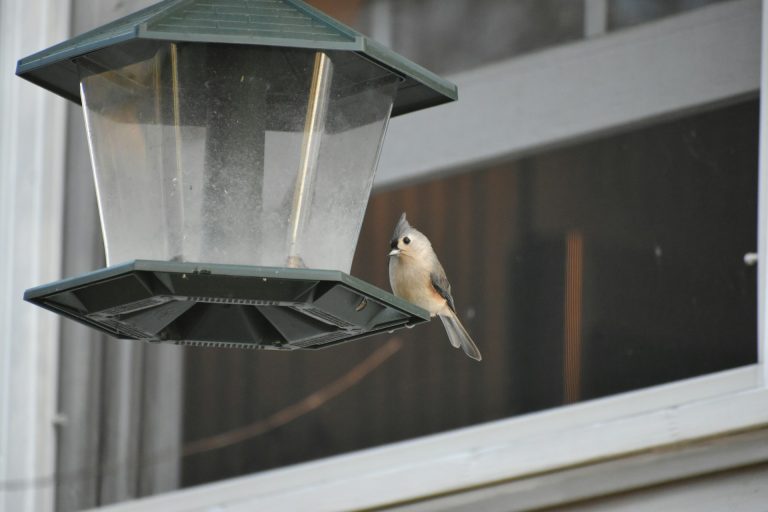
Image by hayleigh b on unsplash.com, licensed under CC 2.0.

- Letter to the Corinthians - January 14, 2026
- A Desert Passage - July 23, 2024