At breakfast on Monday morning, Gail was excited because her father would be home from his trip that night and sad because the eggs and bacon tasted of fish. Knowing this was because the farmers in Nigeria used fishmeal for feed didn’t help.
“It’s not that bad,” said her brother, Peter, who had already finished his breakfast.
“Get a move on” said her mother, Francesca, extinguishing her cigarette in a saucer and rising from the table. “And don’t forget to take your pill.”
Gail swallowed the tiny, bitter malaria pill with a gulp of the orange juice that Joseph, the cook, had mixed that morning from a can of frozen concentrate.
“Can’t I please have some margarine?” Gail made the word rhyme with magazine. Since discovering Joseph’s tub of the stuff in the kitchen, Gail had asked every day to try it on her toast. On the side of the tub, a cartoon girl with orange braids grinned at a slice of bread that was colored a deep, buttery yellow. The picture made Gail drool.
“Oh, fine,” Francesca relented, promising that Gail wouldn’t like it. Gail fetched the tub from the kitchen and smeared a dollop of the disappointingly pale spread on her toast, where it made an oily stain. When she took a bite, it tasted so awful she could have cried about it. Peter laughed. Gail would have liked to kick him but knew he would only kick her back even harder and get away with it. Francesca was unmoved.
“Waste not, want not. We need to leave for school in ten minutes.”
While her mother went back upstairs and Peter locked himself in the downstairs bathroom, Gail slumped in her chair and studied the red ladybugs appliqued around the hem of her dress, the only one of the many in her closet that she truly liked, and tried not to think about the now-cold food on her plate.
But then Joseph brought her a fresh plate of hot toast with peanut butter and took the offending breakfast away, cutting off her ecstatic thanks with a quick shake of his head. Joseph had come to work for Gail’s family when they had moved to Lagos a few months earlier. He was shorter than Francesca and looked as thin as a wire coat hanger in his short-sleeved cotton shirts. Gail loved the sound of Joseph’s voice, though he rarely spoke much at all. When he smiled, a dimple flashed in one cheek like a twinkling star.
Before moving to Nigeria, Gail’s family had lived in Venezuela and in Kuwait, and before that, in Connecticut, where Gail had a vague memory of playing in the snow. Her father worked for an oil company and traveled a lot for work. When he wasn’t away, he went to an office downtown every morning and came home at dinnertime. Gail wished he could stay at home all the time, like her mother did, and come with them to the International Club where Gail and Peter played at the pool with other children who had lived somewhere else before moving to Lagos. Peter had made friends quickly, but there weren’t many girls Gail’s age at the club or at school. Unlike most of the other mothers, Francesca wasn’t afraid to drive in the city, but they usually used a company driver anyway. Gail and Peter sometimes stayed at home with Joseph, who mostly stayed in the kitchen but always appeared when he was needed, like the time Gail dropped a glass Fanta bottle and cut open her big toe, or when a monkey came off the garage roof and rushed at Peter.
Their house was in a half-built neighborhood on the outskirts of the city. The yard was surrounded by a cement wall with broken glass embedded along the top, jagged as shark’s teeth. At dusk, clouds of fruit bats descended on the mango trees, clattering and squealing until the light in the sky died out all at once. The metal gate across the driveway was always locked at night.
Gail was brushing crumbs from her dress and Peter was tying his shoes when Francesca came back downstairs and asked whether either of them had seen her gold bracelet.
“Nope,” said Peter.
Gail shook her head, suddenly unable to speak.
“I’ll just have to find it later,” Francesca said, gathering her purse and keys. “Let’s go.”
As she climbed into the back seat of the car, Gail wished she could go back in time two days to Saturday, when she knew where her mother’s bracelet was and before it was too late to ever get it back.
On Saturday, Francesca was going to take Gail and Peter and Peter’s friend Ronnie to the beach, but first, Gail needed to unclog Sylvie. She held the doll by one ankle and thumped its stiff plastic body against the side of the tub in her parent’s bathroom. Next to the faucet, Sylvie’s glassy blue eyes stared out of the pink plastic head perched on a bottle of Breck shampoo. Finally, a blob of greyish sludge plopped out of the doll’s empty neck hole, a remnant of the flour-and-water goop that Gail liked to feed Sylvie through the small hole between her plastic lips, even though Francesca had told her not to. If it was too thick, the mixture plugged up the other hole that allowed Sylvie to pee. It was her best feature.
“Gail, time to go!” her mother called up the stairs.
“Coming!” Gail jammed the doll’s head onto its body with some effort, turned on the faucet, and nudged the tell-tale sludge down the drain with her fingers. She stood and rubbed her knees, which were dimpled from the shag pile of the blue bath rug.
Crossing her parent’s bedroom, Gail paused at her mother’s glass-topped vanity strewn with low jars of scented creams, tubes of frosted lipstick, a chamois powder puff, a red leather jewelry box, and a silver-framed photograph of her parents on their wedding day. In the photo, Francesca was laughing, elegant in a cream brocade dress and matching silk heels, her dark hair pulled back in a sleek bouffant. Two white flowers anchored the veil that floated behind her. Gail’s father, dressed in his Navy uniform, smiled at his bride as though he were the luckiest man alive. Gail adored him.
In the vanity mirror, Gail’s freckles were as prominent as ever. Her ruddy hair was roughly cropped with uneven bangs, the sad aftermath of a disastrous experiment with window-putty. Instead of the pink seersucker sundress, Gail longed to wear the Danskin shorts and tops that Francesca had bought on home leave in the States, but she had yet to grow into them. At least she didn’t have to wear the bean-shaped lace-up school shoes that were supposed to fix her knocked knees.
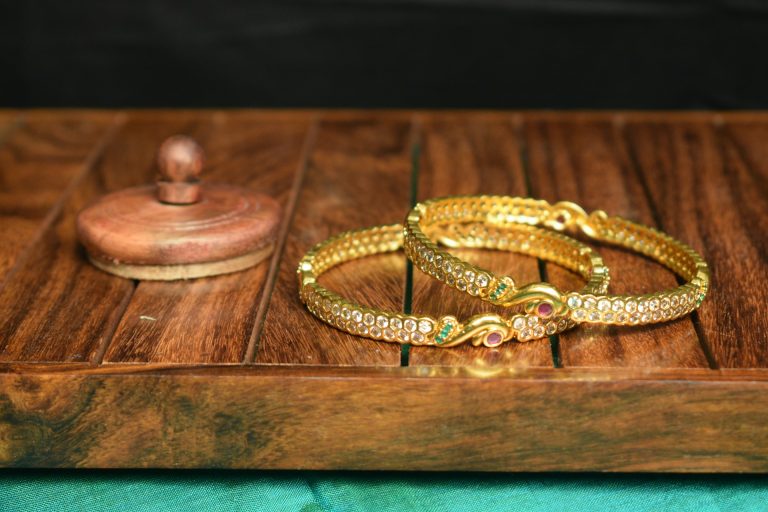
Something shimmering in the mirror, reflected from behind the red leather jewelry box and the jar of cold cream. It was her mother’s gold bracelet — the one Francesca took off when she went to the market or did chores. The heavy links felt cool, then warm in Gail’s hand, and they clinked ever so softly as she dropped the bracelet into her deep dress pocket and headed downstairs.
In the kitchen, Francesca was speaking to Joseph in a loud voice even though he could hear very well. Gail knew this because he always heard her when she snuck into the back-hall pantry, but he never got cross with her.
“Joseph, while we are out, would you please make the brownies I showed you so I can put them in the freezer for the club bazaar? There’s chocolate in the pantry.”
Joseph made a note on the small spiral-bound pad that he kept in his shirt pocket and made a small noise in his throat. “Madam, I think we will need more flour soon.”
“But I just bought a bag! I don’t see how we can be going through it so — Oh, Gail, there you are. Peter and Ronnie are waiting in the car.” Francesca had her large straw tote slung over one shoulder and wore an embroidered batik tunic over her bathing suit, halter strings showing at her neck. Her hair was clipped up in a loose twist, her stylish dark glasses on top of her head. Gail followed her mother out to the carport, the bracelet almost weightless in her pocket.
At Bar Beach, where the children were not allowed to swim because of the deadly undertow, Francesca paid the entrance fee and parked along the side of the road. The ocean was huge and petrol gray, its gritty waves heaving and grinding at the shore. The sand was speckled with bits of tar that stuck to Gail’s white leather sandals. One buckle rubbed at her ankle as she followed Francesca along the beach to where she set up a lounge chair next to a small white cooler. Peter and Ronnie ran in and out of the froth at the water’s edge. Gail, wishing she had her own friend to play with, wandered over to where the boys had begun digging a shallow hole with their hands, pawing frantically like terriers. As soon as they stopped digging, the hole filled with murky seawater. When the water subsided, the hole appeared to be full of pudding.
Ronnie pointed up the beach to a headland in the distance. “That’s where the soldiers execute prisoners. My dad says people come from miles away to watch.” He squinted along his arm and squeezed an imaginary trigger. Peter clutched his chest and staggered around in the sand. Gail imagined that her father was a prisoner and the soldiers were going to shoot him, even though he’d done nothing wrong. She tried to put the thought out of her mind.
“Let’s make a prison,” said Peter pushing up a wall of sand around the hole. “Then we can bomb it with groundnuts.”
“We’ll make separate areas for murderers and thieves,” Ronnie said, sketching two rectangles with a finger. He rose quickly, nearly stepping on Gail. “My dad told our gardener that if he ever caught him stealing, he would tell the soldiers. He said the guy nearly shit his pants.” Ronnie looked toward the headland, his hair sparkling in the sun. “One day, I’m going to go and see for myself.”
Gail knelt beside Peter and poked a finger through the sand near the top of his wall, to make a window for the prisoners. The wall crumbled.
“Gail, you’re ruining it.” Peter shouldered her out of the way and repaired the breach. She moved across from him and began working on her own wall. They bumped heads, and it hurt. “Gail!” Peter pounded his fist in the hole, splashing sand and seawater into Gail’s face. “Go play somewhere else.” Gail kicked at the fort, taking out a chunk of Ronnie’s wall.
“Get away, Gail, you baby,” he said.
“I hate you!” Gail screamed, her voice shifting into a register she’d never heard before.
“Children!” Francesca, glistening with Bain de Soleil suntan oil, had untied the halter straps on her bikini to avoid tan lines and could not leave her chair. “Gail, come sit by me. There’s a towel in the bag.”
Gail wrestled a striped towel from the tote and spread it out on the beach, picking up plenty of sand in the process. Then she decided to move the towel closer to her mother’s chair, shaking it out first. Sand stuck to her mother’s oiled skin.
“Gail, honestly. What is the matter with you?”
“Nothing!” Gail shrieked. She stamped her foot, then burst into tears.
“You will not have a tantrum. Go sit in the car until you can get a hold of yourself.”
Gail trudged to the car, parked nearby in the half-shade of some almond trees. She climbed into the back on the passenger side, where it was cooler, and rolled down the window. Over the roaring surf, she heard vendors calling out to sell coconut water, cigarettes, puff puff, and abacha. Gail tugged on her dress; something was digging into her thigh. The bracelet. She fingered the smooth links in her pocket.
Gail sensed the beggar at the window before she saw her. The woman’s face was marked with scars in parallel lines, her hair and torso wrapped in pieces of blue cloth. A baby clung to her hip. Gail’s parents always ignored beggars or yelled at them to go away. She smiled at the baby, who only stared back at her. Gail pulled her hand from her pocket, reached out the window, and dropped her mother’s bracelet into the woman’s cupped palm. The woman looked over the roof of the car toward the beach, where Francesca was only a few yards away, spit on the ground, and disappeared behind the other vehicles parked on the road. Gail knocked her feet together in a steady rhythm and watched the sand drift from the crepe soles of her sandals to the floor mat below.
By midday at school on Monday, Gail had forgotten about the bracelet. There was a new girl in her class, Rowena, whom she thought might be a friend, plus her teacher had said she liked the ladybugs on Gail’s dress. At lunchtime, Gail was delighted to discover that Joseph had put a brownie in her lunch box. During the last period of the day, everyone got to choose a book from the library and go out to the playground until pick-up time.
Gail headed for the swings, her favorite place to play, but two girls were already there, scissoring the air. The other children were busy playing tetherball, chase, hopscotch, or climbing on the monkey bars. Gail noticed the new girl standing by herself and walked over to her.
“Hi, Rowena.”
“Mmm.” Rowena slurped on a piece of candy, which she trapped between her teeth to show Gail, then tucked back into her cheek. “Would you like a sweet?”
“Yes, please.” Gail stepped closer, trying not to appear too eager. “What kind?”
Rowena spit the piece of toffee into her hand, where it glistened in pool of brown melt. Instead of putting the candy back in her mouth, she rolled it quickly between her palms, then rubbed her sticky hands down the front of Gail’s dress, leaving a brown streak. The toffee clung to one of the appliquéd ladybugs for a moment before dropping into the dirt between them. Gail was too shocked to do anything but stand where she was. Rowena tilted her head to one side, a strand of her pageboy sticking to one corner of her mouth. “Was it nice?” she asked before skipping off to the swing that has just been vacated.
“What happened to your dress?” Peter asked when the driver pulled up.
“Nothing,” Gail said, embarrassed at having fallen for Rowena’s trick. She would tell Joseph when she got home.
But when she and Peter were dropped off at the house, Joseph wasn’t there and must have left early. Francesca was making eggplant parmesan, a favorite of Gail’s father, and told the children to stay out of the kitchen. Peter went to the garden to kick a ball against the back wall. Gail went to her room, kicked off her corrective shoes, and took Sylvie off her shelf. She crawled to the back of her closet, brushing her back against a forest of hems, and retrieved the large coffee can full of flour that she had taken, cup by cup, from the pantry downstairs. In the bathroom she shared with Peter, she mixed flour and water into a thin white paste in the plastic cup where she stored her toothbrush. She sat on the toilet lid, nestled Sylvie in the crook of her arm, and fed the doll, drop by drop.
When Gail’s father came home, she rushed into his arms and he swung her around before pulling Peter into a one-armed hug. He handed Francesca a week’s worth of mail, which was delivered to his office, and a box of the rice-papered nougat she loved. For Gail, he had brought a pair of barrettes that looked like tortoiseshell, and for Peter, a small white pocketknife with two blades. When Francesca clipped the barrettes into Gail’s hair, her father looked up from showing Peter how to safely open and close the knife and said they looked beautiful.
After dinner, her parents stayed at the table and sent Gail and Peter upstairs to brush their teeth and change for bed. Afterward, Peter climbed onto the top bunk in his room to read. Gail tiptoed down to where the staircase made a turn and she could eavesdrop. She heard her mother slice open an airmail letter and unfold it, ice rattling as her father poured a drink, the metal snap of his lighter.
“Where was Joseph tonight?” her father said, exhaling. “I thought I’d see him.”
“Oh,” said, Francesca, “I didn’t want to say in front of the children. I fired him after I took them to school this morning. I’ve suspected him of stealing flour from the storeroom, and then on Saturday, my good gold bracelet went missing. He denies taking anything, of course, but I wasn’t comfortable having him in the house anymore.”
“Good Lord, Fran. Theft is a serious accusation. Are you sure?”
“Well, whether he did or he didn’t, it’s too late now …”
Gail felt the way she did when she fell off the pony on her fifth birthday. She couldn’t breathe. Her heart was beating too fast. What would happen to Joseph if her mother said he was a thief? How could he ever forgive Gail if he knew it was her fault? She ran silently up the stairs to her room and turned in helpless circles until tears burned her eyes. Sylvie stared up at her from the bed. Gail grabbed the doll, pulled off its head, and flung both pieces to the floor.
“I hate you. I hate you. I hate you.” Gail felt like she was shouting, but she was making no sound. She brought out the coffee can from her closet and dumped the flour in the middle of in her room, kneeling to push her fingers through the pile and leaving trails like scars.
Soon, she knew, her parents would come upstairs and catch her red handed.
The roaring in her ears sounded like the sea.
Image by v.govindaraj raj on unsplash.com, licensed under. CC 2.0.

- The Bracelet - September 27, 2025