“Dinner at 7?” Kristin texts and out of habit I find the thumbs-up emoji and hit send. But then it’s 6:50 and Acadia calls out to me from her darkened room, the fairy lights over her bed splashing blue and pink spots onto her pale face. “It’s bad,” she croaks. The pain is back and tearing through her too-thin teenage body. I reach to hold her, but she recoils and shrugs me off so I withdraw, but I can’t keep my hands off. Tentative, I reach back, hovering before rubbing circles onto the hot flesh of her back. Her tears are silent. On the way to get her pain meds my phone beeps, warning me that it’s already 7:15. I text Kristin, “7:30?”. Later I send “is 8 too late” and then “I think 8:30 will work” before I have Dave cancel at 9 and it doesn’t matter, they understand. It’s okay they say. It’s anything but.
I’ve become a woman who cancels at the last minute.
Once upon a time, I was more substantial than this. The proof was back-to-back meetings and squeezed-in coffee dates before the long afternoon hours of carpooling and cheering at children’s sporting events. I wrote to-do lists and grocery lists and lists of back-to-school supplies. I was a woman you could count on. I made plans and I followed them. Efficiently, I shucked ears of corn early in the day, and lined them up on the counter where they waited to be steamed. I marinated chicken breasts in Italian dressing after breakfast so they’d be ready for our dinner later.
I’ve heard that there are people who do not make plans and even people who break plans willy-nilly — people whose calendars retain pristine, empty squares, no smudges, no pencil marks. These people call themselves spontaneous and that’s supposed to mean: Fun! Cool! Laid back! In silent judgment the old me would think: Irresponsible. Lazy.
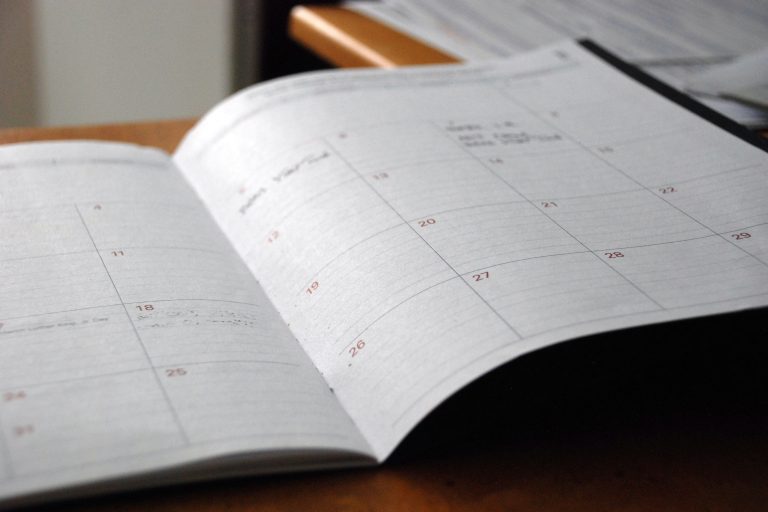
I could always erase and write smaller so I always said yes, to meetings and fundraising events, to carpools and bake sales. My children’s lives unfolded in the pencil marks I made inside the tidy boxes of our wall calendar, day after day, week into month into year. When events scrawled in my kids’ handwriting began appearing there, I smiled as if I’d accomplished something real. But that was before. Now the pencil I hold quivers impotently. I’m pretending that I exist in that world, but really I’m stuck behind the glass of this other one, where mothers have sick children, and those children are sick for years. The bones of my days are doctors’ appointments. Those are written in permanent ink, no wiggle room. No erasing.
It’s unsettling, watching the world pass me by. Like I’m the thing being erased. Women I used to know take kids to update passports. Their kids will study abroad and travel to Europe with friends. Other mothers will receive inconvenient team schedules, and, shaking their heads, they can’t believe their children will have to miss another class. But it’s okay, they say as they set off to watch more games. They will stand in the sunshine or in the rain. They will cheer, wearing shirts the color of their children’s team uniforms.
Had I once complained about waking early on weekends to attend the infinite loop of swim meets and track tournaments? Never mind sitting on blankets in the sun clapping for a goal scored, a record beaten. I am hungry for those days when sleet fell unexpectedly on spring afternoons on the field near the track. I want to be snowed on as we huddle beneath shared blankets on icy metal bleachers. Twisted ankles, dropped balls. I miss the freezing wind, the races lost. Those tears of frustration were so easily brushed away and quickly forgotten.
Another weekend, another chance to be who I was, to honor those penciled-in promises. Her prescription is ready when I get to the drug store, which means I’ll have time to stop on the way home. I’ll get eggs. And we need vegetables so I can make a salad for the dinner party. Not a party, really, just dinner. It’s been so long since we’ve been with friends. In the grocery store, I stand in front of leafy greens coated in fake dew from the misters. I stand there for a long time. Elbows reach around me, selecting their vegetables, circumnavigating me, a statue in their midst. I can’t decide what I need to make a salad so I drift away with nothing. I’ll do better in the cheese section I think, but I don’t. I can’t find the familiar red-coated Tillamook block. “Lovey cheese” we call it because that’s what my nephew called it back when his voice still squeaked sweetly and his feet dangled from his perch high on my counter. I always answered his “Grilled cheese Auntie please?” with a “Yes, Lovey” and so the name stuck. But now I can’t find it or anything that might replace it, so I let go of the heavy refrigerator door and it whispers shut. I abandon my cart by the dairy case and head for the front of the store. I pass two women who I might know talking by the Cheerios, a man with a baby strapped to his chest, and a toddler reaching on tiptoes for a bag of chips. I can’t breathe. I walk faster until, triggered by the pressure of my feet on the mat, the glass doors slide open and deposit me onto the overheated sidewalk. Empty-handed, I search for the car.
Later, when I check, Acadia is asleep. I clutch the ticket I’ve somehow punched for the real world, but untrusting, I recheck her breathing. For a second and third time, I rest the back of my hand, then my palm, against a curiously cool forehead. As I smooth the blankets around her, the doorbell rings. Our friends are here. The smell of chocolate, heavy and hot in the air, weaves through our doorway greetings. I say “Oh thanks, you didn’t need to bring anything” as I reach for the bottle of wine being offered. Then, “Yes, I made brownies. Let me grab them from the oven before they burn” and then “I’ll take your coat — no, keep it on. We’ll sit out back.” Our crabapple trees blossomed only last week and I want to show them off, to sit with them as the backdrop to wine and normal, easy chatter. Earlier I plucked a petal from the ground and brushed it against my cheek, but it was such a thin membrane of a thing it quickly turned brown in my hand.
When the rain starts to fall we move inside, and crowded together it’s almost too warm around the table. Serving forks clang against the old ceramic bowl. The chip on the rim from a dinner before this one is barely noticeable. I watch as a single drop of red wine hovers at the neck of the bottle and begins a slow trek downward towards the flea market tablecloth that matches the old serving platters I inherited, one from each of my grandmothers. It’s as if I have a piece of each of them at the table with me, their supportive arms containing me, keeping me whole. But it’s not working. It’s just a fragment of me sitting here at the table. The rest of me is, of course, upstairs, smoothing hair back from Acadia’s face. Leaning over her. Pulling up blankets and straightening sweatpants. This piece of me nods in response to something someone is saying about spring break plans or the internships their kids are getting in some world that no longer belongs to us. I hear laughter to my right, and turn.
I want to know what’s funny. I want to laugh. Do I even remember how?
But laughter is a fleeting thing and before I can grab hold, it’s gone. After dinner, the guests leave and silence drapes itself back over the house. Dave stands at the sink doing dishes. I gather the tablecloth, bunching it in my arms to hide the Rorschach blotches of wine and brisket gravy that threaten to expose me. One of them looks like a woman disappearing.
Image by Eric Rothermel on Unsplash, licensed under CC 2.0.
- Dinner Party - July 29, 2025
I’m already hooked, and can’t wait to read more!
I am so proud of you, Daphne, and honored to call you friend.