


Fifty-Seventh Annual Report of the Trustees of the Massachusetts School for the Feeble-Minded at Waltham, For the Year Ending September 30, 1904
“One is at once struck with the freedom from care that is everywhere evident in their faces…All is enjoyment, and Saturday after-noons all is merriment. They are kind to one another, an excited word is rarely heard, a blow is rarely struck. They are fond of animals, and never cruel to them.”
The boy slept on the floor with
his dog that last night before they
both left. A pool of her yellow vomit
on the wood beside her shaking,
old body. He made up songs, sang
to her about fields full of bones,
the heat of silver suns. She dug
her paw into his thigh as she smelled
the smoke of the boy’s father as he flicked
ash down the stairs, coming closer.
He was dumb drunk. He was sending
his son away, the carriage has been called.
It’s suffering, son, it’s suffering,
father grunted, and the boy whimpered
as he watched father drag her faded
fur ear out into the yard. Spring dawn
had broken with all its nauseous beauty,
filling that bottle-filled field with sun,
leaving the old dog blinking, dumb, the iron
O of father’s pistol barely felt, as she searched
for the eyes of the boy. He was inside,
couldn’t look, just heard scream of metal
lodged. He ran into the day, clung
to his father’s coat, trying to crawl
in him to hide. Bring her back.
Now boy belongs to new yard, a sweeping
spring of farm land where the other boys,
the other patients, are gentle as they pet
and poke the sides of sleeping sheep,
run with wet-nosed mutts into the grass,
point at the blade of geese across
the clouds headed home. The boy is not
among them, hidden beneath the barn,
holding the squirming body of a rat,
plump off stolen crackers. He takes
the rusted bite of a nail toward its trembling
fur, which fuses stiff by blood. He stares,
as its yellow teeth chew air, its steel squeak.
Beneath his grasp, it gasps as he leans
his palm in, lets his weight weigh.
The corpse is the color of the sand and dirt
beneath the barn. The boy digs another
small grave with his fingers. He smells
the smoke from the other boys, lighting
a fire, roasting red meat above the flame.
Hears the mutts whimper for scraps, leaping
with their tongues drooling out
of their mouths. When Father dropped
him off, he told the boy he’d bring him
home tomorrow. His father gripped
his shoulder like a pistol, then stumbled
to the carriage, didn’t turn back to see his son
sun-startled among the dumb dogs
that follow the boys about in the fields.
Click here to read Oliver Egger on the origin of the poem.
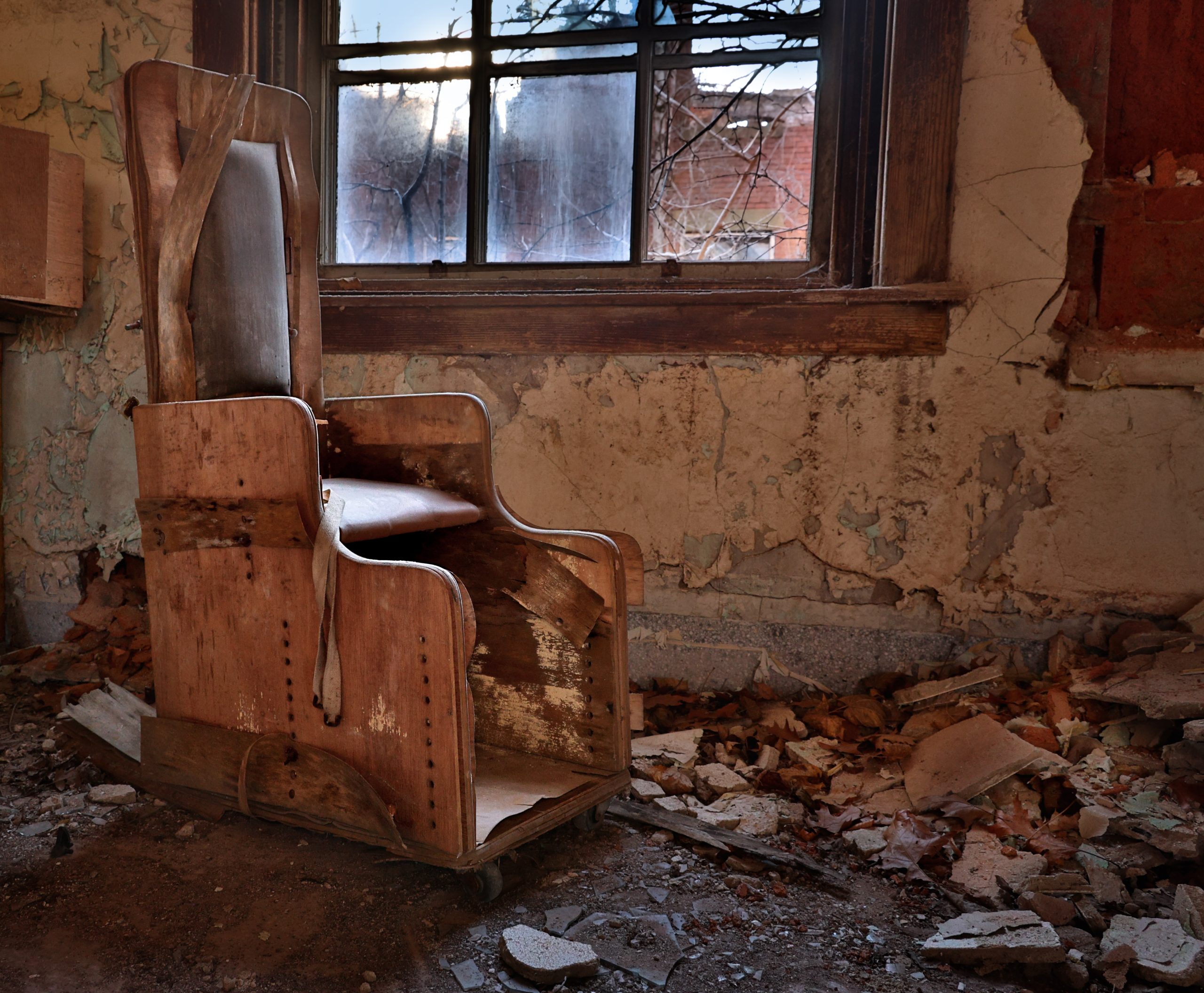
Photo courtesy of Bryan Parcival, taken at the abandoned Walter E. Fernald State School.

- Fifty-Seventh Annual Report of the Trustees - September 30, 2025
- This Place - August 30, 2024