


The assignment was to write an essay about happiness, and I was at a loss. I write about trauma. I’ve experienced a great deal: domestic violence, sexual abuse, poverty, and sick kids. Making sense of hard things and turning them into narrative is what I’m good at. But happiness? I wasn’t sure I had anything to say about that.
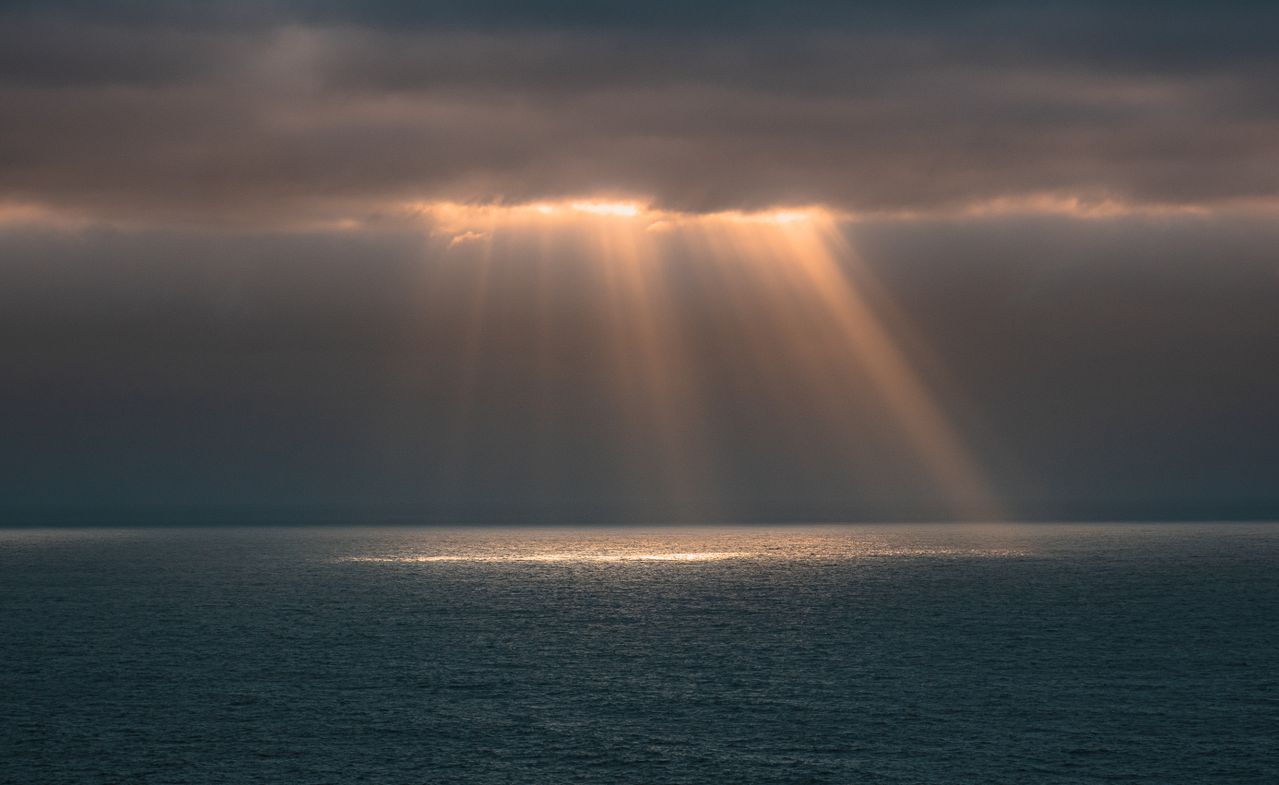
I’d always thought of joy as a gift, like a shaft of sunlight hitting the water on a cloudy day. Something that might appear in unexpected places and at unpredictable times and that the only thing a person could do was pay attention and notice it when it showed up.
But there’s no essay in that, at least not one I could find. Essays need arcs and growth and a unifying theme, and unless I wanted to write a listicle about the things that make me happy — clean sheets, good chocolate, new books, walks in the rain, cups of tea — I had no idea what to write about. And then I remembered my paddleboard.
For years, there was a vision board pinned to the wall above my computer, filled with photos cut from magazines of book-lined studies, interspersed with pictures of women kayaking on the open ocean, their sleek vessels cutting through the grey water.
I learned how to kayak the year before my kids were born, falling in love with the way my body moved the boat through the water, out of the protected harbor into the deep channels running between islands, and how strong it made me feel. I spent Sundays exploring the shoreline alone or with friends, paddling close to the sea-sculpted sandstone, marveling at the sea stars and anemones visible beneath the surface at low tide or watching for otters, seals and whales, bartering work as an assistant guide with a local kayak company in exchange for borrowing one of their boats.
I saved up for my own boat twice, then spent the money on school trips, or to replace a hot water tank. Kayaks aren’t cheap, even used. I entered my fifties, and it had been more than a decade since I’d sat in a boat. Arthritis stung my joints, and runner’s knee made me unsteady, limping with pain at times. Physio helped. The dream of owning a kayak was a residual yearning of my younger self. I doubted I could even lift a boat onto my roof rack anymore. And yet, my life jacket still hung in the basement closet beside my paddling gloves. I didn’t know how to let the dream go. Then someone posted a paddleboard for sale in our local Facebook Marketplace; it wasn’t a kayak, but maybe it would answer that longing I still felt to get out on the water.
My nineteen-year-old daughter Emilie came with me, and we met the seller in the grocery store parking lot after lunch. The young woman had been in Canada on a work visa for a few months and was moving on and selling her stuff before winter came.
“Do you want to look at it?” she asked, handing me a huge backpack with the paddleboard packed inside.
I lifted the pack easily. It was no heavier than a Christmas turkey, which answered one of my concerns. I shook my head. I had no idea what to look for. I’d never been on a paddleboard and had only the barest idea of how they worked from skimming online ads the night before. I certainly wasn’t going to inflate it in the parking lot. Instead, I paid her and we drove away.
“Don’t you want to take it out on the water?” asked Emile on the way home.
“Not yet,” I said, already wondering if my impulse purchase had been a mistake.
At home, we unpacked it in the basement. Once we had inflated the orange and turquoise board, the desire to take it out on the water was overwhelming. So, Emilie and I folded down the back seats in my van, and squeezed the board in. We drove to a beach access inside Montague harbor away from the Provincial Park. The trail from the side of the road through the old cedar and fir trees and down the hill towards the beach was longer than I remembered. I carried the paddleboard, which was light, if unwieldy, and I managed. Even on the steep steps that bridged the high bank to the shingle shore. Emilie carried the paddle and our towels. Getting wet seemed an inevitable part of the process. Still, it was a walk that would have been impossible with a kayak.
There were lots of boats in the harbor, but Emilie and I were alone at the tiny beach access. I rolled up my pants and stepped into the cold water to put down the board. Emilie held it still while I kneeled down in the middle. I knew I didn’t have the balance to stand, so I sat and paddled, and it was perfect. The sun was bright. The leaves on the maple trees that reached over the water were turning yellow. I wished I had a double-ended kayak paddle instead of the single-ended one that came with the board. But I didn’t fall off. After ten minutes, I went back to the beach to let Emilie have a turn. We zipped out and around the moored boats, then came back to the beach to trade places. After an hour, my arms were sore, and my bad knee was throbbing, so it was time to go home. Paddle boarding had been better than I’d imagined.
A few days later, I returned home from work, ate lunch, cleaned the kitchen, then sat in my study ready to write. Or, I thought, I could go paddle. Going out on my own was something I couldn’t have done with a heavy kayak, but the board was light enough that I could get it into the car by myself. I hesitated for only a moment. I could write later.
The previous day I’d spent some time with a map looking for a good place to practice. Montague Harbor had been perfect, but the long trail and stairs of the beach access we used last time were daunting. And I wasn’t ready for an audience at the main beach yet. Montague Harbor is shaped like a capital letter ‘C.’ A narrow opening leads to a broad protected harbor, on one side of which is the provincial park with an overflow campsite on the harbor side of the park that would be empty at this time of year. That’s where I headed.
The sunshine of the morning had thickened into heavy cloud, but it wasn’t overly cold. When I got to the parking lot, there was only one other car there. The water was smooth, and the beach was empty. I carried my board to the tide line where I took off my shoes and tucked them under the tether straps that ran over the front of my board. I fastened my life jacket and knelt gingerly on my board. I picked up my paddle and dipped it into the water, and in minutes I was gliding over the still ocean.
I stayed close to the shoreline, sliding beneath the maple trees that were dropping golden leaves singed with red onto the water, and under the arbutus trees, their trunks papered with shreds of rust-colored bark and laden with bright orange berries. I could hear the high trilling call of the juncos in the branches. I’d been hoping to spot the shy cedar waxwings. Arbutus berries are a favorite of theirs, but my paddle splashed against the surface of the water, rather than slicing silently, perhaps I was too noisy.
Broken-up boulders of tafoni sandstone form the shoreline here, with their strange carved hollows, and I began to feel comfortable on the board, the pull in my arms and the balance in my hips reminded me of kayaking. I still struggled with the single-ended paddle. After every two strokes, I had to change hands and take two strokes on the other side, otherwise I spun in a circle. Instead, I zig-zagged back and forward erratically. When I passed over shallows, I could see rocks and seaweed beneath me, and occasionally the sudden movement of a scuttling crab. Or I’d watch the reflection of the grey clouds gathering overhead.
I paddled until I reached the first house past the park boundary and rolled my shoulders against the unaccustomed pull of the blade. I prepared to turn back. Until then, I’d stayed within twenty feet of the shore, but when I turned my board around, I realized I was level with the tip of Greys Peninsula which formed one edge of the entrance, the start of the letter ‘C.’ Instead of going straight back, I could cut across the harbor, past the empty mooring dinghies and sailboats wrapped for the winter, until I hit the shoreline on the other side of the bay. From there I could complete the loop by following the park’s edge back to the parking lot.
I hesitated. The water in the center of the harbor was deep, and I’d be far from shore if anything went wrong. Plus, I was alone. I looked around me at the empty boats, the deserted hiking trails along the shore. When I’d started out on the water, there’d been a group of people standing on the park dock. Their voices had carried across the still water, but the cold must have driven them back to their campsite. I hadn’t tried getting back on my board from the water, and I wasn’t sure I could. I needed to be braver. If something went wrong, I could always swim to shore. I used to be an excellent swimmer and, worst-case scenario, I could abandon my board. That wouldn’t be the end of the world.
I pointed the tip of my board toward the first mooring buoy and started my zigzag paddling. I was almost there when it started to rain. Gently at first. The drops pinged off the board, mottling the flat surface of the water. I set the paddle across my thighs and glided, closed my eyes, and listened to the percussion of raindrops on the flat water. Should I turn back? But I was wet already from my paddle splashes. What difference would a little rain make? I kept going. By the time I reached the second buoy, halfway across the harbor, the rain had intensified and I was soaked. By then it was as far to carry on as it was to turn back. My world had shrunk to the harbor, the trees on the shore, the roar of the rain, the dark clouds pressing down on the hills behind the bay.
I kept paddling, and the shore of the peninsula drew closer. I couldn’t see anyone anywhere. I breathed in the stillness of the empty world, reveling in being unreachable. I navigated my board beneath the reaching branches of the fir and maple trees that lined the bank, then turned to the right. Relief flooded my system as I glanced back at the shore on the other side of the bay. Pride swelled in my chest. I’d done it. I’d made it across. I hugged the shoreline once more as I headed toward the parking lot. A tiny grebe darted away from me, back towards the tidal flats of the lagoon that emptied into the harbor. As I approached the entrance to the flooded lagoon, I could see a strange shape jutting up from the water. Faded blue, slatted, with a peak at the stern and helm, and for one minute I imagined it was a wooden boat, the kind the priestesses of Avalon might have used to ferry King Arthur back to the Glastonbury Tor. I drew closer and discovered it was an old plastic deck chair, faded in the sun, caught up in the eelgrass-covered branches of a tree that touched the water. My mind was still in Avalon. Rejoicing in the feeling of being lost in the fog with the patter of rain all around me, I heard a woman’s voice raised in song. The high notes drifted out between the boughs of the cedar trees on the far side of the lagoon. I paddled closer until I glimpsed a red jacket through the screen of trees. I couldn’t make out the words, just the lilting melody, and I imagined the Lady of Shallot serenading me home.
I glided along the shore, still zigging and zagging, but more confident with my strokes. My feet were aching, and I appreciated my old kayaking gloves. I slipped underneath the park dock and followed along the edge of the shingle until I reached the steps that led to the parking lot. I grounded my board on the shell beach and stepped into the icy water. My feet were so cold it was hard to get them back into my shoes. I stamped feeling back into them and headed back to my car.
I had paddled alone. Across the deep harbor. I still had a lot to learn. I had yet to encounter a wave, or the wake from a boat, or even stand on my board, but I got out on the water. As I drove away, I realized it was more than pride, it was joy that filled me.
For me, finding happiness involves putting myself in its path. I can’t predict when or where it will come. I could have fallen off my board that day or turned back when the rain started. I could have missed the magic. Sometimes joy is on the water, or in the way the spring sun lights up the daffodils in the green vase on the table, or in the rush of watching a bald eagle winging through the dense forest early in the morning.
I try to pay attention, to notice what’s around me. I try to put myself in the way of joy.
Image by Mo Eid on pexels.com, licensed under CC 2.0.
- Putting Myself in the Way of Joy - November 5, 2026