


1.
My father was an oil man whose career coincided with the rise of oil and the beginning of its decline. I grew up in a family so loyal to the industry that many years later, even after my father’s death, I winced and felt a pain in my chest when the term “dirty fuel” was used for fossil fuel, as if my own father had been sullied.
I tell his story to extract from it the complexities of one person’s life devoted to oil that includes, in my father’s case, oil’s vast subsidiary: the petroleum-based molecules that form petrochemicals like plastics and fertilizers. People develop emotional ties to their work, including to the oil industry — of loyalty, pride, financial security, and sacrifice.
Twenty years after my father died, I received a packet of his old letters. I open the letters now and find a brown manila folder containing blue-penned drafts and carbon copies of typed cover letters seeking employment. This file holds not the beginning of my father’s career, I realize, but rather his failed attempts at avoiding a premature end after 37 years with Exxon. I offer the reader the first of two letters between oil colleagues:
March 23, 1985
Dear Mr. Kreipke,
I retired from Exxon as a Project Executive in January 1984 after 37 years of service. I am now seeking some new assignments that would challenge me and permit me to make a worthwhile contribution to a company’s profit. I enjoy organizational troubleshooting and problem solving as I did in Summerville (1974) and Brussels (1969). My resume is attached.
On my last assignment, in Canada, I was in charge of design engineering, construction, starting and initial operation of the two Esso Chemical plastics plants in Sarnia, Ontario (233 M$ CF). We came in under budget, on schedule and achieved excellent startups. Furthermore, we had the best construction safety record ever recorded in Canada (1.7 disabling injuries per million man hours). Also, we integrated forces for field construction. This latter action helped both parties, particularly in the punch listing, checkout, acceptance and turnover phases to the operating organization.
I believe that I can be of assistance in helping your organization, either on an assignment or part-time basis. I look forward to speaking with you in the next few weeks.
Sincerely,
John V. Schen
At the time this letter was written, Exxon faced a major economic downturn after a long period of expansion. With a dearth of startup operations on the horizon, the need for my father’s expertise evaporated. Exxon cancelled petrochemical projects and enticed longtime executives to opt for early retirement with a generous severance package — the so-called “golden parachute.” This metaphor suggests a shimmering descent and soft landing; my father fell hard and fast. He moved to Maryland’s Eastern Shore and played golf, volunteered in the duck decoy room at the St. Michael’s Maritime Museum, and turned increasingly to alcohol to pass the time.
My father had begun each workday walking the plant site. He wore a hard hat and safety goggles. He pulled on rubber overshoes and rolled up his suit’s pant legs. He oversaw construction, talked over engineering problems, inspected safety precautions, and reviewed blue ink designs. He performed cost analyses from a trailer, a Pall Mall cigarette smoldering in the ashtray. When Exxon offered him a job at its New York City headquarters, he turned it down. “There’s no way I am going to shuffle papers doing a desk job,” he told me.
If my father had misgivings about how Exxon had summarily dropped him, doubts about Exxon’s integrity and conduct, I don’t detect it in this letter. From its inception as Standard Oil, Exxon cultivated a tight knit, loyal, male, conservative, and church-going culture. By telling his story from the beginning, I hope to understand why he and others like him stayed committed to a corporation that betrayed them.
2.
A group of high school graduates gather in June 1940 in Belmont, New York, the seat of Allegany County in western New York state. The town boasts a population of 1,000. It is one of a scattering of farming towns set amid the rolling pastures and forests of the Genesee River valley. My father is seated front row center, the middle of 14 students wearing caps and gowns. His expression is soft yet serious. He gazes intently into the middle distance. His forehead bulges slightly in earnest concentration.
For studious, hardworking young men born in rural towns in this region of the United States in the early twentieth century, men of ambition and little means, oil was the ticket out of small-town life. Oil was part of the culture going back generations: Just across the border in northwestern Pennsylvania lie Oil Creek Valley and Titusville where, in 1859, the first oil well was drilled. Oil Creek flows into the Allegheny River, joins the Genesee River, and then runs through Belmont, spreading a wide network of shallows and sand bars.
The history of oil prospecting in the hills surrounding Belmont survives in capped oil wells and roads named Petrolia and Day’s Oil Lease. My father gravitated to the opportunities of the industry at least in part because his early landscape was one filled with the quest for oil.
I visited Belmont as an adult to step foot in my father’s hometown and find clues to explain his choice of career. I had imagined I would talk with residents and visit his childhood haunts. I’d stay for a week or so. As a child, on rare trips home, he would take my sisters and me down the dirt path to the Genesee. He taught us how to select the perfect flat stone; how to flick our wrists just so; how to send the stone skipping across the surface of the water.
Many years later, I walked along the quiet main street and entered a corner diner advertising the supper special. I stopped by Nicholson’s pharmacy where my grandfather had worked as a pharmacist and manned the soda fountain. I spoke to the women behind the drugstore counter and to the elderly men in plaid shirts having their dinner of meatloaf and potatoes. No one remembered my father. I left the center of town and followed the cracked and heaving sidewalk a quarter mile to 49 Willets Avenue, where my father had lived in an American Foursquare house set on a corner lot.
The day before we arrived in Belmont, my husband and I spent the night in a small Canadian town along the St. Lawrence River. We rented a cottage whose windows opened to the river’s breeze. In the middle of the night, I was wakened by the lumbering sound of a freight train, its wheels clanking as each wagon passed by loaded with metal containers. These trains go on for a long, long time. They cut through the flat agricultural plains that span the U.S.-Canadian border and bring evidence of the world of manufacturing to quiet farming towns like the one I was about to enter. A commuter rail in Concord, Massachusetts, where I live, rushes past and is gone, leaving no impression, no vestigial shadow. These trains are different. They reach deep and echo in the soul.
I stood before my father’s childhood home. All was quiet. No cars passed by. I turned the corner to Erie Street. After half a block, I stopped. There in front of me lay a railroad crossing with its train tracks practically resting on my father’s back porch. I remembered how he’d tell us, I’d watch a train go by with a passenger car and people sitting there and think to myself, I’m going to be on a train like that one day. The train that would carry him, I discovered, beckoned right from his back porch. After someone leaves a town like Belmont, after time passes and a whole generation dies that had acquaintance with the departed member, the community seals itself over. That person seems to vanish without a trace.
I asked my mother once if my memory was true, that we didn’t visit Belmont much when I was a child. “Why would we?” she replied. “There was nothing there.”
There is not nothing here, I whispered, but it can feel as if you too are nothing, a mere disoriented, wavering, insubstantial ghostlike entity, struggling to find recognition. Forgotten by the rest of the world, the town in turn denies that the rest of the world exists. A stranger comes to town and becomes invisible. I came to town a stranger in search of a memory no one had; I departed an alien outsider.
3.
One afternoon, rocking side by side on the porch of a lakeside cabin, my father told me that he’d hoped I would become a chemical engineer. He confided this secret to me after he’d retired, after I’d left publishing and journalism and set my sights on medical school. If he was expressing disappointment in my career choice, I didn’t hear it. What I sensed in that moment was his impression that I could have become a chemical engineer. That is, I had what it took. And that, despite feeling let down by his company, as I imagine he did in the end, he remained proud of his profession.
What I didn’t have, apart from my personal aptitudes, was the social, political, and historical context of college in the era of World War II.
In 1940, my father graduated valedictorian of his high school class, applied to New York’s Rensselaer Polytechnic Institute, and was accepted. My grandfather walked with him to the state bank and opened the family’s safe deposit box. It contained a total of 750 dollars. My grandfather handed over the entire amount, saying, “Well, that’ll do you for about two semesters.” The money covered close to two years of tuition. His service in the army during World War II, which interrupted his third and fourth years of college, paid for the rest.
Rensselaer was the first university to create a chemical engineering major. Situated in Troy, New York, home to the first U.S. steel manufacturing plant, Rensselaer understood the labor needs of heavy industries like oil and steel. Chemical engineering students (the current Rensselaer catalogue quips that a chemist wears a lab coat; a chemical engineer a hard hat) took courses in physical and organic chemistry, mathematics, physics, and chemical reactor design. They studied thermodynamics, quantitative analysis, metallurgy, business economics, engineering science, engineering drawing, English composition, German, and geology. It was a rigorous course of study.
When my father matriculated, Rensselaer had begun mobilizing for war. Chemical engineering students were swept headlong into preparations. University President Hotchkiss formed the Research Defense Council to assist university scientists in adapting materials for defense. Faculty developed new technologies geared for wartime. College administrators joined the U.S. government and industry to bolster the war effort and recruit and train industrial workers (including Rensselaer’s first group of women) for occupations essential to national defense. Students who signed up for these programs pledged to enter military service.
A front-page article in the student newspaper, The Polytechnic, dated May 4, 1943, stated that the administration advised its undergraduates to enlist in the Corps of Engineers. The Chief of Engineers pleaded: “We are finishing up the biggest emergency construction program the U.S. has ever seen. Now we’re moving on to a program of construction overseas. We’re in the middle of a big job now — the job of helping to move men and equipment into place for assault. We need men for this job, as well as men for the next job coming up — the attack itself.”
Two weeks later, The Polytechnic reported that the administration would release from college responsibility all enlisted Reserve Corps with a 3.0 or greater grade point average. These students were free to depart for military duty. A student wrote: “Hasta! Personal ambitions and plans don’t mean much right now. Many students have seen their life aims altered or even completely eradicated by the progress of the war. Many of us, however, still cling to the hopes which we had before December 7, 1941. We believe that some day we will be able to return to Rensselaer and take up where we left off. God grant that we may be able to do so.”
The call to action worked. In May 1943, my father enlisted as a private in the Armed Forces and a soldier in the Corps of Engineers. The patriotic atmosphere at Rensselaer was pivotal. His individual choice fell in line with that of vast numbers of young men across the country.
He hardly ever talked about the war. Once he mentioned that he’d contracted trench foot and recovered in a military hospital in England. After his death, I traced his army years from several sepia-toned photographs. One 1943 photo shows my father and stepbrother Bob standing side by side in uniform. My father is young and slim, with the polished shoes, khaki pants, and pressed shirt of a new recruit. He looks baby-cheeked and freshly shaven. Tilted jauntily upon his shorn head sits a crisply folded garrison cap.
In the next photograph, dressed in a heavy woolen uniform, his face is puffy, his eyes vacant and unseeing. His hair is combed wet and slicked back. On the reverse side, inscribed in faded ink, is the following:
Mailly le Camp
France
April, 1945
Please forgive the
haircut, it was the
first time in two
years it had seen a comb.
Thus, I learned that my father was stationed at the military base Mailly-le-Camps in northern France at the end of the war, the site of a tragic air battle in May 1944. Radio communication problems, including interference from the American radio broadcast (playing “A Rose Grows in Texas”), caused a several minute delay in the radar detection of Axis bombers who slipped through and shot down Royal Air Force aircraft. Allied troop and civilian losses were heavy. Mailly-le-Camp is 42 miles south of Reims where Nazi General Alfred Jodl signed the unconditional surrender of the German forces on May 7, 1945.
My father must have witnessed firsthand how oil and its byproducts, in particular synthetic rubber, fueled the Allied machinery of wartime and helped the Allies win the war. The war solidified his resolve to merge his life with the oil industry.
A huge influx of soldiers returned to Rensselaer in September 1946, my father among them. Enrollment doubled. Dormitory space overflowed. Administrators canvassed homes in Troy to solicit rooms for the returning soldiers and their new wives.
In June of the following year, my father graduated and went to work for Esso Chemical Company. Esso hired him at the top pay tier of 257 dollars per month.
4.
When my father took his first job as Section Head of the Lubricating Oil and Wax Group at Humble Oil and Refining Company (a subsidiary of Esso), he must have done so with the belief that his work contributed to the greater good of the world.
Amongst his papers, I found a dark blue leather folder from the Sloan School of Management at Massachusetts Institute of Technology. Dated May 5, 1964, it holds a diploma for a program for senior executives. It has a peculiar feature: Scotch-taped across the cover is a yellowed strip of paper with these words typed in Cambria script:
O Divine Master, grant that we may not so much seek to be consoled; as to console; not so much to be understood, as to understand; not so much to be loved, as to love. For it is in giving that we receive; it is in pardoning, that we are pardoned; it is in dying that we are born again to eternal life. AMEN.
I imagine my father typing, correcting with white out, cutting, then taping this prayer over his diploma.
From his time at Sloan, a photograph shows him smiling as he grips the tail of an oversized stuffed toy tiger. Four men hold the tail alongside him, all men are dressed in dark suits. They grin widely. This photo sits in our family album and captures Esso’s famous slogan of power and pride: “Put a Tiger in Your Tank!”
My father accepted without question company assignments that necessitated family transfers from New Jersey to Pittsburgh, Pittsburgh to Denmark, Denmark to the Netherlands, from the Netherlands to Belgium, and from Belgium back to the Netherlands.
It was a heady time. The world of petrochemicals was in its infancy. My father wasn’t an oil man so much as a petrochemical man whose career fit neatly within the massive rise of this branch of the oil industry. Plastics, fertilizers — all the synthetic byproducts of fossil fuels — challenged and fascinated chemical engineers who were spurred on by the excitement of new discoveries and technological advancement.
Growing up, I had little grasp of the industrial world of oil and petrochemicals. This realm existed separate from the domestic life of our family, only overlapping when our family visited the plastics plants and refineries on Family Days and when we bought gas exclusively at Esso service stations. My two sisters and I naïvely believed that this gasoline, along with our father, was the best. We had little awareness of our bias or the fact that this separation was enforced by Exxon’s strict code of security.
On his C.V., the neat advancement of my father’s career reads smoothly and hides the ramifications to family life. Every two years my father would arrive home and in a subdued and serious tone ask us to gather in the living room. “You’d better sit down; I have news,” he’d say. We came to anticipate the next sentence: “We’re moving.” My mother was not informed of the move prior to her children, nor was space given for questions or discussion, much less negotiation. It was an order from on high. For my sisters and me, these announcements were accepted as part of routine family life.
Only as an adult did I experience the repercussions: an internal alarm that would ring after I’d lived two years in one place, a signal telling me it was time to move on; a longing for a lost home; a search for belonging. Most difficult, however, was the eventual fracturing of our family.
My father’s career path required absolute loyalty to the Exxon Corporation. He tested that necessity when he asked to be transferred back to the United States. “Why,” I asked my mother, long after my father had died, “did he do that?” My question was full of regret and mourning. My father was at the pinnacle of his career as head of Dutch Esso Chemie. My mother was happy in Wassenaar with a life of music and friends. I loved my high school and had a best friend who lived a block away.
My mother answered: “He was worried that after all those years living overseas, you girls were losing a sense of being ‘American.’ So, we moved back.”
Exxon granted his request, but at a cost. My father’s upward trajectory took a nosedive. He was assigned general manager of a small plastics plant in Odenton, Maryland. The move catalyzed hardship for each member of the family.
Families fracture. So do plastics plants. These two fractures coincided in the small Maryland company town. Exxon purchased the Odenton plastics plant called Nevamar. It began to sell off the plant’s most valuable parts. Did my father participate in the dismantling of a town’s sole industry? If he did, it would have devastated him. He held himself to a standard: to be a caring manager to his workers and an engineer committed to manufacturing a product of which he could be proud.
After three years at Nevamar, he made a second request of Exxon. He asked to relocate to New Jersey. This request was a last-ditch attempt to save his marriage. It was also, I imagine, a way to escape feeling powerless in the face of corporate guidelines which would have required him to prioritize Exxon’s profit over sustaining the community’s main source of livelihood.
Again, Exxon granted my father’s request; but again, with a demotion. He was appointed manager of the engineering, construction, and maintenance department of the Bayway Chemical Plant. The transfer did not save the marriage. His drinking didn’t stop. My mother, having fulfilled the duties of an Exxon wife — packing up the house without complaint; dressing the part in pearls and black cocktail dress; serving as an exemplary hostess for the requisite work dinners — could no longer hide an insidious contempt for the world of oil and its businessmen. She took a job in New York City and left my father.
5.
April 4, 1985
Dear Van,
Your 37 years of distinguished service with Exxon covered what is perhaps the most productive and challenging periods our industry has known. That Lummus and Exxon shared this experience is something you and I can be proud of. Please accept my belated congratulations on the occasion of your retirement and my appreciation of your offer to be available for an assignment with Lummus.
As contractors, we are on bad times and have been for a period longer than anyone can remember. Like our competitors, we’re in the grips of downsizing and restructuring to meet the market and, for the moment, I cannot offer you anything concrete by way of an assignment. Indeed, we’re in that awkward stance of being over staffed and over qualified for the work we are pursuing in 1985. We expect things to turn in 1986 but, on the other hand, a year ago we felt that way about 1985.
Van, nothing would please me more than an opportunity to utilize your services and I remain alert for this possibility when the market conditions change.
Sincerely,
Sven Kreipke
This reply conveys respect and compassion. It is certainly not a form letter. Kreipke reads between the lines and senses my father’s shame, soothing it with the phrase, “something you and I can be proud of.” He greets my father as a trusted and valued colleague. Careers in the oil and petrochemical industries during this period of growth and expansion, especially for those in engineering, were infused with pride.
In the end, except for work as an audit executive — first for the Saudi-Exxon linear low-density polyethylene plant in Al Jubail, Saudi Arabia, and then for Syncrude in Ft. McMurray, Alberta — my father found no further employment. Future inquiries sound peculiarly innocent and insecure coming from a seasoned oil executive. Responding to an ad in the Times, he writes, “I’d like to get back in the fray again since I am in good health and the occasional consulting I am still doing is not enough.” This confession to the anonymous “Sirs” of the Human Resource Department at Chase Manhattan Bank didn’t land him a job as Senior Construction Project Manager.
We lose confidence the longer we remain out of work. We doubt ourselves. And yet in my father’s letter I encounter his honesty. He believed in the direct approach. He wasn’t afraid to be vulnerable even though it betrayed his inexperience applying for jobs. He had stayed with one company and climbed their ladder, beginning with his first job out of college.
Exxon was my father’s life. The arc of his career paralleled that of the industry that shaped him.
6.
It is hard to paint an honest picture of a parent. Portraying the darker side risks obliterating the loved qualities. We too easily forget the things we’ve lost that we loved. I loved my father. I know that he loved me. He was the parent I could rely on, the one I called when I broke my ankle and couldn’t cross my studio apartment with both a cup of coffee and crutches in hand. I called and he came.
My father had a stroke when he was 72. My sisters and I met at the Baltimore-Washington International airport and rented a car to drive out to Easton. “He’s had a brainstem stroke,” the neurologist told us, “from an embolus most likely caused by atrial fibrillation.” He instructed my father to quit drinking or he’d die. “Well, if I have to quit drinking, that’s what I’ll do,” was the matter-of-fact reply.
Exxon lost interest in my father when he placed his own needs over those of the corporation. Alcohol blunted my father’s dismay over the industry’s treatment of him, allowing him to remain loyal to Exxon for his whole life. Days before he died, he reminisced and recalled the highlights of his career. His face glowed.
To me, though, he paid a price: in morale, marriage, and family roots. He was ultimately both successful and downtrodden. He was powerful and yet a pawn for the higher-ups.
I came to an understanding: What had looked to me initially like a personal choice born of my father’s ambition and natural inclination was in fact a choice shaped by the particulars of his childhood geography and the geopolitical and economic conditions in which he lived. In some ways, he chose wisely. He rose in social status and financial security. He lived abroad and commuted on the fast train from Brussels to Den Haag, the kind of train he’d dreamed of as a boy. He experienced the rise and expansion of an industry that was, at the time, exciting and stimulating.
The wish to hold on to the past can override the ability to change. My father, so resourceful in the beginning, couldn’t adapt, although he did abstain from alcohol for the rest of his life.
An individual can grow up in a rural town distant from the world’s social, economic, and political forces and yet end up propelled by them. Industrial innovation, technological advances, and the war influenced my father’s career choice. Oil promised to build the country’s industrial and economic powers and make major societal advances. Oil moved my father from the periphery — following that train that rumbled through Belmont — to the center, and then back out again.
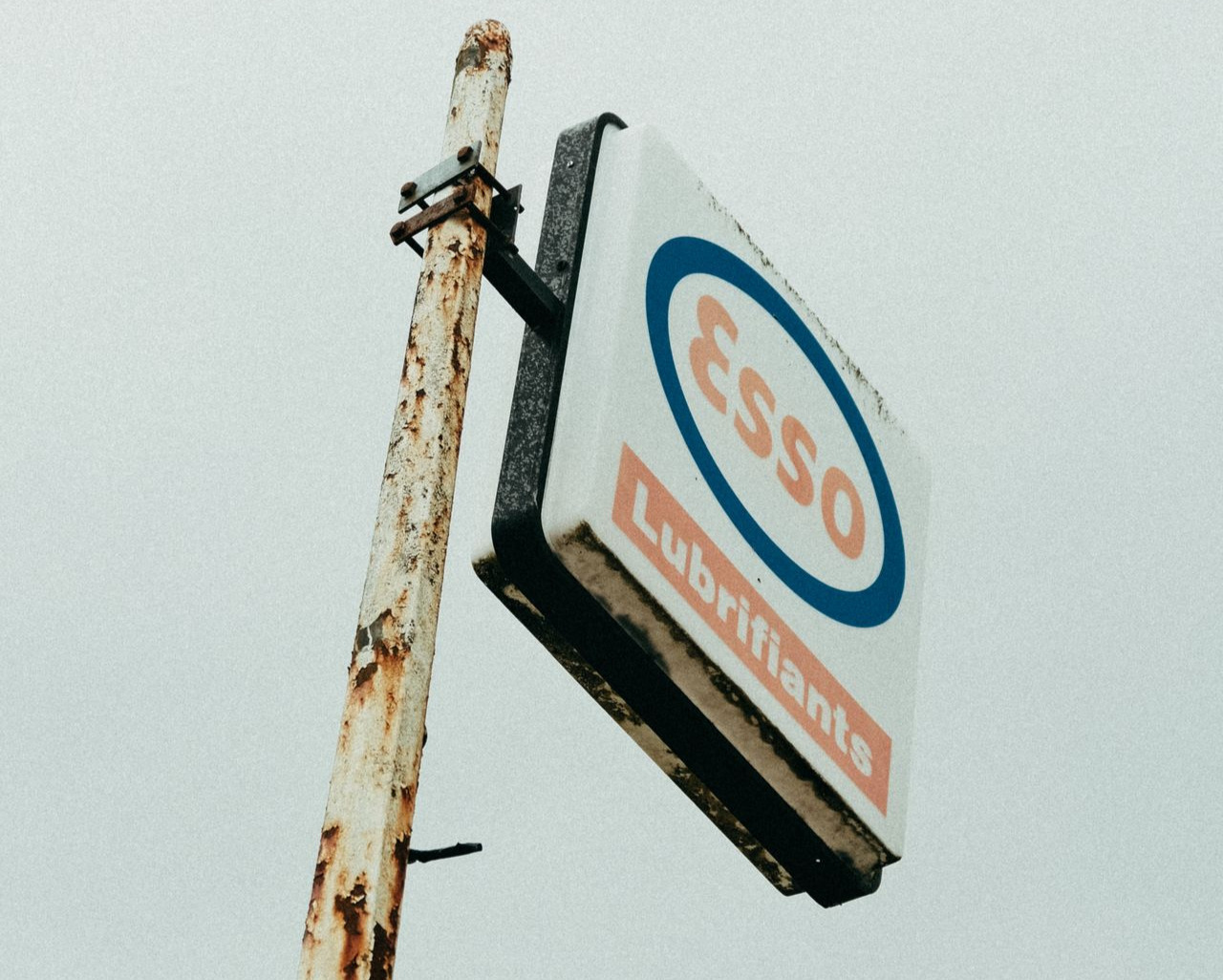
Image by Mathias Reding on pexels.com, licensed under CC 2.0.

- Without a Trace: A Life with Oil - September 13, 2026
- Nevermore - April 26, 2024
- Going Back to Denmark: Landscape and Memory - April 29, 2017