


Inside the packed church with its windows wide open, I should have been sad like the rest of the sweating congregation. But I didn’t remember Mary, the mother of my best friend Sandra, whose funeral I attended that sunny March day in 1970. I was a baby when Mary ran away up north.
My older brother told me that dead people sweat when it’s hot. Mary wasn’t sweating where she lay in the coffin. She had on a blue frilly dress, and her curly hair was as shiny as lump coal. Her dark, narrow face, sunk deep into that white pillow, was bone dry. I was eleven and I’d never seen anyone lying dead like that. I felt like Mary ought to wake up and say something.
A few minutes later when Sandra went to the coffin, her face was wet, but I doubted that she was crying. She held her grandmother’s hand while she leaned over and kissed Mary on the cheek, then she stared at Mary like she didn’t know who she was. How could she? Mary had left town when Sandra was a baby. Sandra had never even seen a picture of her mother.
At the cemetery, Sandra’s father, Charlie, kept bugging her grandmother, Miss Esther, to let Sandra come live with him and his wife in Montgomery. The trip was not even an hour if you took the blacktop instead of the unpaved country road. But Miss Esther didn’t want Sandra even that far away, so she said no like she always did.
I began that school vacation looking forward to two weeks of not having to get up early and take one rickety cheese-colored school bus and then another just to get to elementary school 40 miles away. But during the first week of vacation, my best friend Potato went to live with his mother in Washington, D.C. With my brother Patrick always tired from cutting cordwood and Potato gone that left just me and Sandra. And now Sandra couldn’t play because her mother had died.
A few days after the funeral, recalling how sad Sandra’s grandparents had looked at the church and cemetery, I didn’t want to make my usual Saturday afternoon trip over to help Mary’s grandfather in his garden. My brother Patrick was filling in for my father at his job cutting cordwood since my father was laid up with a bad back. But my mother said I couldn’t go with Patrick because of those C’s I got on my report card. That spring, every time my mother said I couldn’t do something it was because of those C’s. I was getting tired of hearing it.
“Where you been, boy?” Miss Esther said as I sat down on the back steps. Sandra’s house was like mine, unpainted and gray with four square rooms and no indoor plumbing. Miss Esther was tall and dark like her husband and her voice was thin as a twig. Her long hair lay down the middle of her back in a single thick gray braid. A long-toothed comb the color of bubble gum was pressed into the side. “My husband may laugh at your tardiness, Billy,” she said, shelling peas into a dishpan on her lap. “But I’m here to tell you it’s not funny.”
Sandra’s grandparents were always telling stories about their honeymoon trip to Memphis to hear the blues, which Mr. Brown loved. They also loved to talk about how things used to be in the colored section of the stretch of houses that sat along the dirt road. As far as I could tell, there was no other section. Only a few black folks lived there. Two years earlier the reverend had moved away.
I didn’t answer Miss Esther’s question about why I was late as I handed her the bowl containing the coleslaw my mother sent over. I thought she was going to ask me again, but she didn’t because the Jackson Five began blaring on Sandra’s record player. Sandra loved the Jackson Five, and those sad family shows where the little girl gets a disease and everybody cries. Sandra had a record player and a TV, neither of which I had at my house.
Usually, Miss Esther made Sandra turn down the record player. But today she ignored the loud music as she held the bowl of coleslaw with an outstretched arm toward the screen door. “Come get this, Sandra,” she yelled.
When Sandra came outside Miss Esther didn’t look up as Sandra grabbed the bowl and took it inside. When Sandra came back out again, she sat down on the end of the porch. Sandra was wearing a polka dot blouse, a faded blue skirt, and shoes without socks. She usually wore her hair in four braids. She had completed only two braids and they looked rushed. “Hey, Billy,” she said, barely smiling.
When Miss Esther looked up and saw Sandra, she almost spilled the dishpan of peas. “Why didn’t you put on the green dress I laid out for you?” she asked Sandra. “You know your daddy Charlie said he was coming over today.”
“Grandma, you know Charlie was just talking,” Sandra said, working on one of the loose braids. Her hair looked like it hadn’t been straightened since before the funeral and she was having trouble separating it with her short fingers. “Charlie ain’t coming all the way from Montgomery today and then come back for church on Sunday.”
When Sandra shot an angry glance at Miss Esther, I sensed an argument coming. Sandra was always arguing with her grandmother, but at least she talked to her. When Charlie visited, Sandra was quiet. Of course, Charlie was such a talker that it was hard to get a word in anyway.
***
“I thought I was gonna have to come get you, boy,” said Mr. Brown when I arrived at the garden.
Mr. Brown grinned, revealing the missing top teeth on the right side of his mouth. He was wearing his straw hat. His whip hung on the branch of a nearby pine tree. He used to scare us with it when we were kids, snapping it loudly. My brother Patrick told me that Mr. Brown said he would cut him into nine pieces with the whip if he messed with Sandra. I approached the garden looking around to make sure there weren’t any headless rattlesnakes lying about.
Mr. Brown handed me a bucket filled with tiny turnip shoots and then walked ahead of me, carrying a bucket of water and the dipper. He did the planting that spring although Miss Esther was better in the garden. She read the almanac all year long and not just for the stuff on gardening. “Now don’t you say nothin’ about them crooked rows my husband dug,” Miss Esther had said earlier at the back porch.
Mr. Brown hummed as he walked ahead of me, pouring water into holes dug along the row. Music was one thing Mr. Brown and Mary had in common. They both quit high school before graduating to join a singing group. For a while, Mr. Brown played an old cornet he kept in a case under the bed. My mother told me that Mr. Brown didn’t like it when Mary started going out with that musician from Mobile. He wanted her to marry Charlie so the two of them could raise Sandra who was just a baby. Mary told Mr. Brown to stay out of her business, but Mr. Brown didn’t stay out of Mary’s business and finally Mary and that musician took off. Now whenever the reverend bragged about how Mary used to sing in church Mr. Brown didn’t have much to say. But Miss Esther did. She said Mary could sing like an angel.
I dropped the wilted turnip shoots into the small holes and quickly covered their purple and white roots with the wet pungent soil, rushing so I could get done sooner. Several times Mr. Brown made me redo the holes I hadn’t covered right. We finished two rows and then stood in the shade near the hanging whip.
“Better get something in that head of yours, boy,” Mr. Brown said. He tapped my ear with his long index finger. “So you can take something with you when they come and tear down these decrepit houses.” He took off his straw hat and wiped his bald head with a damp handkerchief he pulled from his overalls. “How many counties in Alabama?” he asked quickly.
I looked down at the ground.
“Sixty-seven,” he said. “Sixty-six books in the bible. Sixty-seven counties in Alabama. My daddy taught me that.” He laughed. “When my daddy was your age, he worked the fields. I did too. You think this garden got long rows? Boy, you ain’t seen nothing.”
“Potato says he’s gonna join the Marines,” I said.
Mr. Brown cut off a quick laugh. “Listen, boy,” he said. “Nowadays you gotta finish high school just to sweep floors.” He put his hat back on roughly, shaking water loose from his large, yellowed eyes. “I tried to tell Mary to get an education,” he said. “But that girl wouldn’t listen.”
***
When me and Mr. Brown got to the back porch, Miss Esther and Sandra kept shelling peas as Mr. Brown walked to the back door. As soon as the screen door slammed, Sandra emptied peas from her small bowl into the dishpan on Miss Esther’s lap.
“Grandma, can Billy and I go play down by the creek?”
“No, Sandra, you might fall in.”
“But, Grandma, there’s just a little water in the creek. I can’t drown in a small puddle.”
“Sandra, I said no.”
Sandra slammed the small bowl down. It made a cracking sound. “That’s probably why Mary left. Y’all wouldn’t ever let her do nothing.”
Miss Esther started to get up but stopped. “Don’t talk like that, Sandra. You hear?”
Sandra stormed down the steps and stood on the ground with her back to Miss Esther. “Well, can Billy and me at least walk up to Aunt Pauli’s house and back?”
Miss Esther sat back in her chair looking down her nose. My mother said that Miss Esther got that habit from her grandmother who had been a lay minister. Miss Esther’s eyes went up and down Sandra’s body and she shook her head slowly as if suspecting that me and Sandra were headed for trouble. “All right,” she said. “But hurry back, I want to wash and press your hair for church tomorrow.”
***
Sandra was quiet as we walked down the middle of the dirt road. The bushes rustled in the growing wind, sending off red dust. Aunt Pauli wasn’t really Sandra’s aunt, or my aunt, or anyone’s aunt who lived along the road. She was an old lady who sold candy bars and cold sodas out of her house. The kids called her that because she used to give us candy suckers when we were little. We weren’t going to her house. She lived in the opposite direction from where we were walking.
“I’m going to the eighth grade next year,“ Sandra said when she finally spoke.
“I know that,” I said.
“I know you do,” she said. “I’m just saying it. When’s Potato coming home?”
“Next week.”
She kicked a rock to the side of the road. “Potato missed the funeral.”
Potato and I used to sit in the back corner of the classroom and tease the girls coming to use the pencil sharpener. But two weeks before spring vacation Miss Griffin handed out a seating chart that had Potato at one end of the front row and me at the other end. Sandra didn’t have to move. In my new seat, I won’t even be able to see the pencil sharpener without turning all the way around. But Miss Griffin will be too close for that.
“Race you,” Sandra said, giggling and taking off down the road.
In elementary school, Sandra could outrun everyone. She knew all the holes and exposed roots to avoid when tearing across the grassless school yard. Sometimes Sandra, Potato, and I would bet some new boy a nickel that Sandra could outrun him. Usually, after the boy lost, he had to bring the nickel to us a penny at a time. When we got the pennies, we’d go down to Aunt Pauli’s and buy one of the candy bars she kept in that old refrigerator with the missing door handle. We’d divide up a brittle chocolate bar between us and suck on the cool pieces as we kicked up dust on the road. One time, Sandra spread some of the chocolate over her lips and pretended it was lipstick. Potato made like he was trying to kiss her, and she slapped him hard across the face and he chased her home, without catching her, of course.
I took off down the road after Sandra, and I managed to catch up without too much trouble. Then I noticed that Sandra had her hand on her blouse, pressing against her stomach. “Sandra, what’s wrong?” I said, trying to pull her hand away.
“I’m all right, Billy,” she said, holding her hand in place. “I got something to show you.”
“What is it?”
“I’ll tell you in a second,” she said.
I followed Sandra off the road and through the trees to a small clearing. She kicked away several pinecones, sat down, and unbuttoned her polka dot blouse. I smiled. My brother was always telling me how hard it was to get girls to unbutton their shirts. Sandra had on an undershirt, which she pulled up and that’s when they fell out, the letters, Mary’s letters.
“Where did you get those?” I asked.
“I saw Grandma stuffing one of them between her mattresses. I found the rest in her chifforo’. I found them while y’all was on the back porch.”
When I reached for one of the letters, Sandra slapped my hand. “Miss Esther ain’t gone like you taking them letters,” I said, realizing why Sandra had the music up loud.
“I’ll put them back this evening while she’s washing her hair for church tomorrow,” Sandra said. “But I want to read ’em first.”
“All of ’em? We ain’t got time.”
“Yes, we do. It’s only six letters.”
Sandra pulled one of the letters out of its small envelope and unfolded it. It was written on paper with raggedy edges like from a spiral notebook. “Look at the way Mary makes her t’s and s’s.” Sandra said. “Just like me.” Sandra started reading:
“Dear Momma, I’m leaving Saint Louis today. I’ve got a few minutes before the car come. My boyfriend never did find a steady job and now he went back to Mobile. My girlfriend says I can stay with her and her momma in Chicago ‘til I find my own place. I know the weather is real bad in the wintertime but I know things there got to be better than in Saint Louis…”
When Sandra finished reading that letter, she read a few more:
“… Chicago where I’m living, it’s so big, Momma. I believe there’s more people here than I’ve ever seen. But it don’t scare me too much. I like all the people and all the things to do. I got a job cleaning houses when I’m not singing. And that’s most of the time now. I work for a family that’s real nice most of the time. . .”
Eventually, Sandra picked up the fifth letter and when she got into it, I wish she hadn’t. She didn’t look up from the letter. She just kept reading ‘til the end.
“. . . My baby girl Brenda passed last week, Momma. They had the funeral at the church I go to on the Southside. I sing there sometimes too. I know you would like the church. I know I keep saying it, Momma, but I figured it was the best thing to leave Alabama. God knows there wasn’t no jobs or nothing there. You tell Daddy that I’m sorry I cursed him out and took his money. I miss you, Momma. Love, Mary.”
Sandra folded the letter, put it down and picked up the last one. “I wonder how come Mary didn’t say nothing else about the little baby,” she said as she opened the last letter.
“I got out of the hospital last week, Momma. The doctor says I’m doing better, but I don’t believe him. The old woman down the hall gave me some roots to boil. . .”
Before Sandra finished reading, I said the thing I shouldn’t have. “There ain’t nothing in these letters about you,” I said. “Didn’t Mary write anything about you?”
“Shut up, Billy.”
“When’s Mary going to ask about you?”
“She will.”
“When?” I asked. “I ain’t heard nothing yet.” I reached for the last letter and that’s when Sandra started crying. She threw down the letter and ran back toward the road. I ran after her. When I caught up with Sandra on the road, both of us looked up and there was Charlie’s shiny blue 1973 Buick Le Sabre slowly coming toward us. The car slid to the side of the road and Charlie got out, leaving the door swinging. When he saw Sandra’s open blouse, he started yelling and jerking my arm.
“Boy, what you done?” he said.
“Nothin’,” I said. “I ain’t done nothin’.”
“Don’t lie to me, Billy. Why is Sandra crying? You think Mr. Brown’s bad, you ain’t seen nothing. I’ll beat the shit out of you before he finds out. Now speak up.”
That’s when Charlie lifted me off the ground. Not by my waist like my brother did but by the collar of my T-shirt.
Sandra started crying louder. Now she was clinging to my leg. “My momma died. My momma died.” She kept saying that over and over. Charlie put me down and that’s when Sandra started going on about the letters. She was hysterical.
“What letters is this child talking about?” Charlie asked.
“She read Mary’s letters,” I said.
After Charlie calmed Sandra down, he just stood there staring at the woods for a long time. And then he went in. He must have stuffed the letters in his pocket ‘cause I didn’t see them when he came out of the woods. Me and Sandra got in the back seat of the car, and we were sitting in the living room when Charlie told Miss Esther and Mr. Brown about the letters.
“Oh Jesus,” was all Miss Esther said at first. Mr. Brown didn’t even say that.
“How long has Mary been writing?” Charlie asked Miss Esther.
“She didn’t want me to tell you where she was,” Miss Esther said.
“And ain’t that just like Mary not wanting folks to get in her business,” Charlie said.
“Ain’t no need to talk like that about Mary,” Miss Esther said. “She loved you and Sandra.”
“Yeah, she sho did. She loved us enough to run off with the first man come up from Mobile,” said Charlie. “And how come Mary didn’t come see her daughter in all these years? Somebody tell me that.”
Miss Esther put down the can of snuff she was opening and went and stood near Charlie. “Everybody’s aiming to talk bad about Mary. I expect the world might too. But not in my house.” Charlie was rising from the sofa when she slapped him hard across the face.
Mr. Brown threw his arms around Miss Esther and held on. I don’t think Charlie felt anything because his eyes seemed far away as he sat down again. He didn’t say anything else, at least not while I was there.
***
The next day was the third Sunday, church Sunday. After the service, we had a picnic. The congregation huddled under the little shade provided by the large oak tree that lightning had struck on one side. Momma and I went down one side of the picnic table while Sandra and her family followed the reverend and the deacon down the other side. Charlie’s son, in his small dark blue suit and bow tie, hugged Charlie’s legs while his wife Elenora leaned over the white tablecloth, fixing their plates.
Sandra and Mr. Brown were silent while Miss Esther and the reverend talked.
“That Mary could sing like an angel,” the reverend said to Miss Esther, wiping his face with a paper napkin.
“Yes, she could,” Miss Esther said. “Most times I have to keep on Sandra to get ready for church. But not Mary. She loved the singing. And to hear the word.”
The reverend nodded and Miss Esther went on. “Been reading Mary’s old letters,” she said, reaching for a dinner roll. “It keeps my mind from clouding. Mary wrote how she loved that bell that used to be out in front of the church. I remember she used to say how she wished she could ring that bell the way the deacons did on Sunday morning.”
The reverend’s mouth tensed and he shook his head.
Sandra and I were each eating a chocolate cupcake when Charlie came up to us. He led Sandra off a few feet, making sure he stayed in the shade. He wiped his wet forehead with his hand and flicked the sweat to the ground.
“Your grandmomma said you can come and live with me for a while,” he said, putting his wet hand on Sandra’s shoulder. “If you want to.”
Sandra took another bite of the muffin, staring at Charlie. “You got any letters from my mother?”
“No,” Charlie said. “But I did find a postcard. Just a few lines. No return address. Packed it away and forgot that I had it. I was probably jealous that she mentioned you more than me.”
Charlie handed Sandra a Dixie cup filled with fruit punch. “Let me know if you need anything else,” he said.
Sandra did not watch her father walk away. Her large brown eyes searched the chocolate muffin for a good spot for her next bite. I walked over and Sandra looked at me while she weighed her Dixie cup with one hand and her chocolate muffin with the other. She did the grin like she usually did when both hands were full of something sweet, just a slight smile, before she took a bite of muffin.
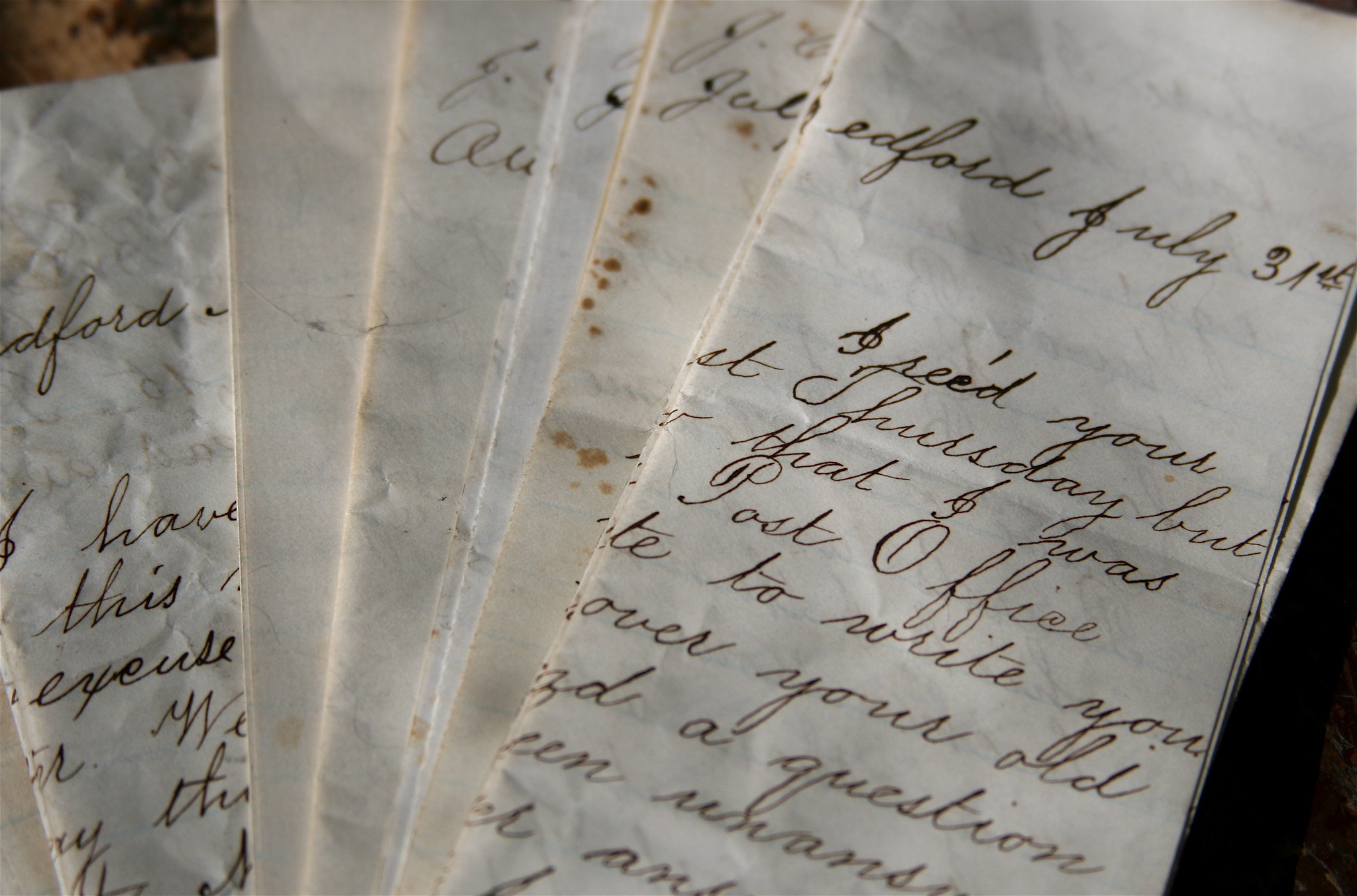
Image by Liz West on flickr.com, licensed under CC 2.0.

- Spring Reading - June 19, 2026