


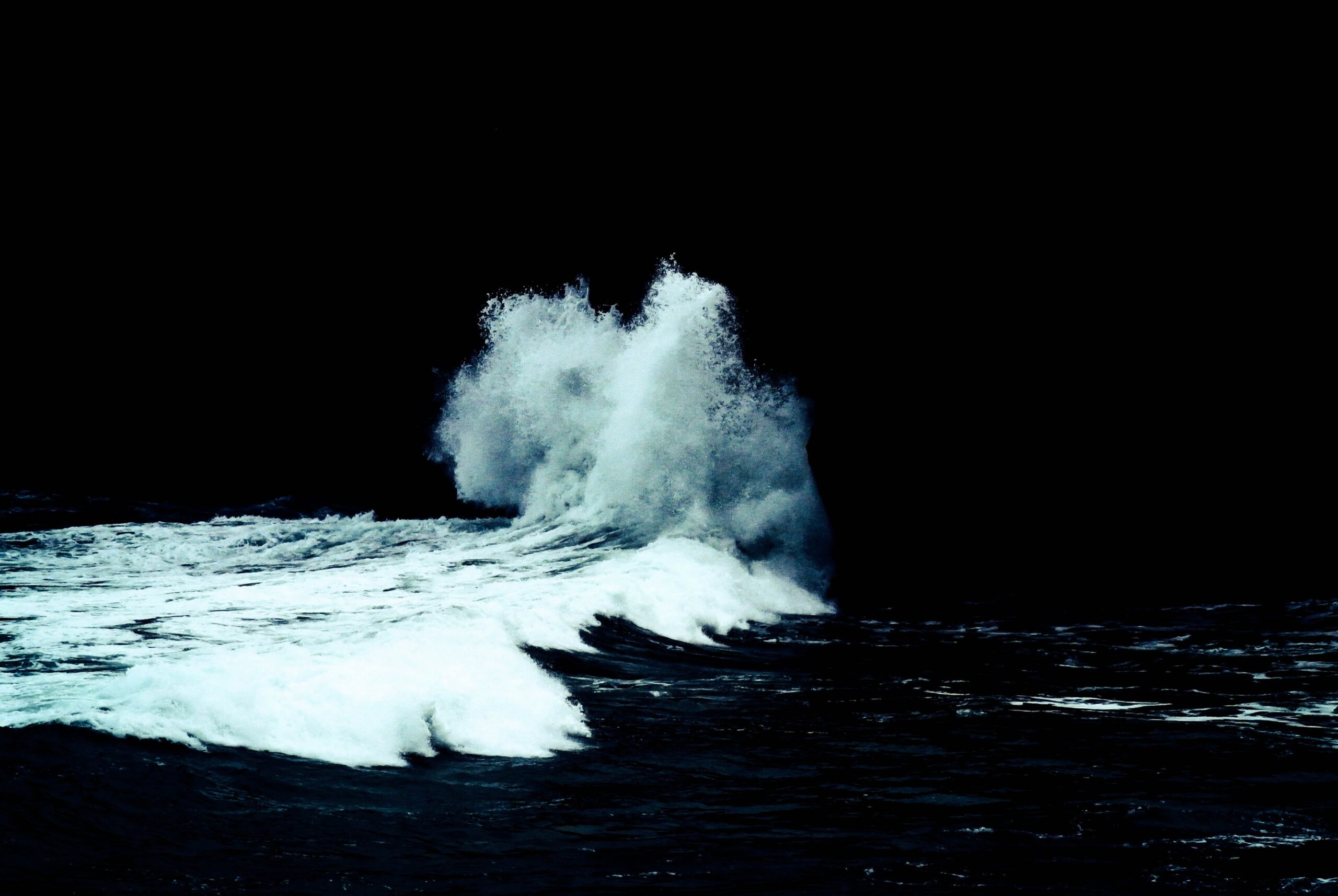
Tonight the harbor is the sea: waves
thunder, detonate on rocks, slosh
over the seawall. The glaring moon
has dissolved the stars.
Few others are out, it is so cold.
If I walk to the end of the pier
in this eye-watering wind, boards shuddering
under me, might I find what to say
to my friends, mourning their daughter?
If this night has any advice,
it’s in a language I don’t understand.
My children are alive and healthy.
How can my words not hurt?
The question is a cloud of breath.
Click here to read Richard Hoffman on the origin of the poem.
Image: Photo by Aleks Dahlberg on Unsplash, licensed under CC 2.0.

Richard Hoffman is author of five books of poetry: Without Paradise; Gold Star Road, winner of New England Poetry Club's Sheila Motton Award; Emblem; Noon until Night, which received the Massachusetts Book Award, and People Once Real. Other books include the memoirs, Half the House and Love & Fury, Interference and Other Stories, and the essay collection Remembering the Alchemists.
Latest posts by Richard Hoffman (see all)
- Crucifix - October 28, 2025
- Spectacle - July 11, 2023
- Cold Requiem - November 30, 2021